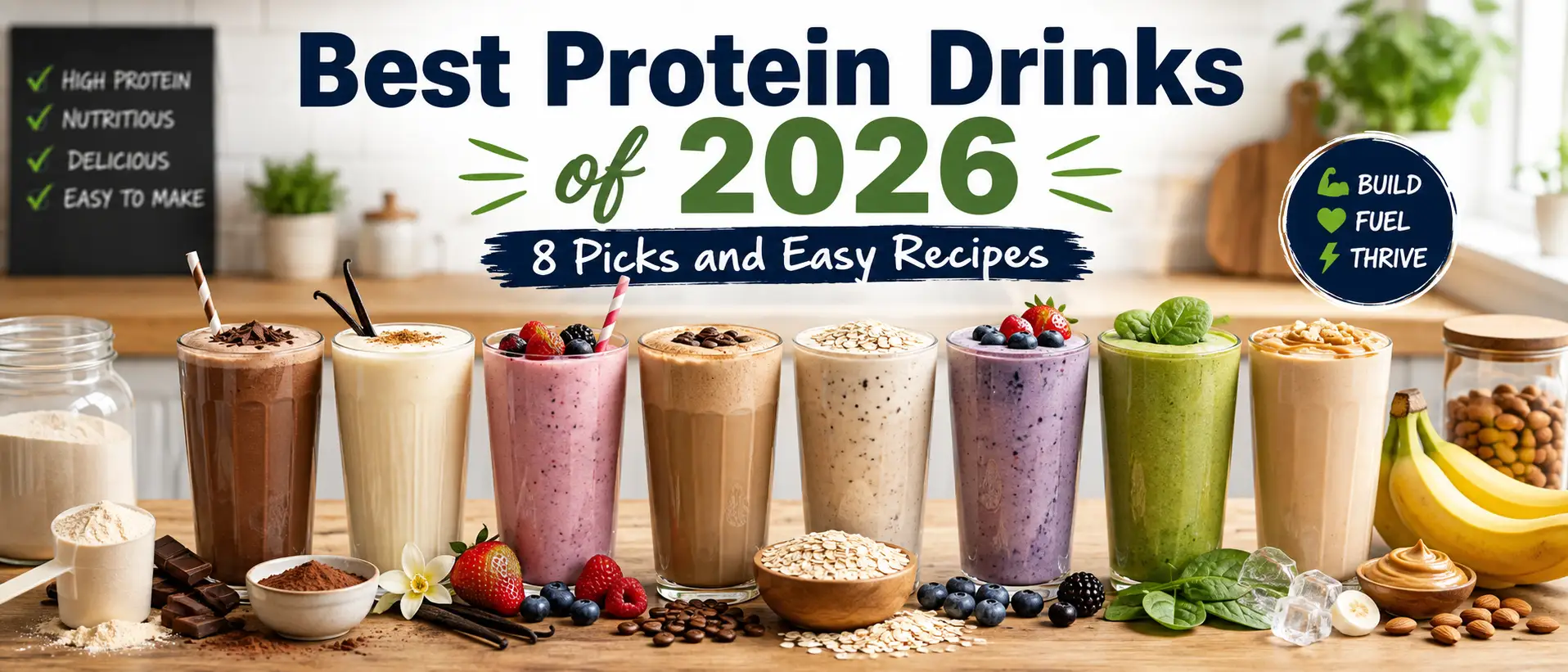
The best protein drinks make it easier to add protein when cooking or eating a full meal is not practical. However, bottled shakes differ greatly in protein source, calories, added sugar, fiber, allergens, sweeteners, and intended use.
Some drinks are light snacks. Others are designed for post-workout recovery. A true meal replacement shake should provide more than protein alone, including carbohydrates, fat, fiber, and essential vitamins and minerals.
This guide compares current ready-to-drink options using their published nutrition labels. It also explains protein types, label terminology, timing, digestion, storage, and complete homemade recipes.
Quick Answer
A good everyday protein drink usually provides 20–30 grams of protein, fits your calorie needs, and avoids ingredients that cause discomfort or conflict with allergies.
Choose a simple protein shake for a snack or workout. Choose a balanced meal drink when replacing breakfast or lunch.
Key Takeaways
• Protein drinks and meal replacement shakes are not the same.
• More protein is not automatically better.
• Compare added sugar, not only total sugar.
• Dairy-based shakes may contain whey, casein, or milk protein isolate.
• Plant-based shakes often combine pea, soy, pumpkin seed, or fava bean protein.
• Athletes should consider credible third-party certification.
• Homemade shakes can provide protein without using protein powder.
How This Guide Was Evaluated
This is a nutrition-label comparison, not a blind taste test. Products were assessed using information published by their manufacturers and checked on August 6, 2026.
The evaluation considered:
• Protein per bottle
• Calories per serving
• Total and added sugar
• Fiber
• Protein source
• Allergens
• Artificial or alternative sweeteners
• Whether the drink is a snack or complete meal
• Publicly listed direct-purchase pricing
• Suitability for dairy-free or lactose-free diets
Formulas and prices can change. Always check the bottle you purchase, especially when avoiding allergens or specific sweeteners.
Best Protein Drinks of 2026 at a Glance
| Protein Drink | Best For | Protein | Calories | Sugar and Fiber | Protein Source | Direct Price |
|---|---|---|---|---|---|---|
| Fairlife Core Power Chocolate | Best dairy-based balance | 26g | 170 | 5g sugar, 0g added sugar, 2g fiber | Ultra-filtered milk | Varies by retailer |
| Premier Protein Classic | High protein for fewer calories | 30g | 160 | 1g sugar, no added sugar | Dairy protein | Varies by retailer |
| OWYN Smooth Vanilla | Everyday plant-based option | 20g | 180 | 4g added sugar, 3g fiber | Pea and pumpkin seed blend | About $3.25 per bottle |
| Koia Elite Chocolate | High-protein vegan option | 32g | 210 | 4g added sugar, 6g fiber | Pea protein | About $4.17 per bottle |
| Orgain Clean Protein | No artificial sweeteners | 20g | 130 | 3g total sugar | Grass-fed milk protein | About $3.00 per bottle |
| Quest Chocolate Shake | Low-sugar dairy shake | 30g | 170 | 1g sugar, 4g carbohydrates | Dairy protein | Varies by retailer |
| Huel Ready-to-Drink | Complete plant-based meal | 20g | 400 | At least 6g fiber | Pea-based blend | From $4.42 per bottle |
| Huel Black Edition RTD | Higher-protein complete meal | 35g | 400 | At least 6g fiber | Pea and fava bean protein | From $4.83 per bottle |
Prices reflect listed direct-purchase or subscription pricing where available. They exclude shipping, taxes, local promotions, and retailer discounts.
The Best Ready-to-Drink Protein Shakes
Fairlife Core Power Chocolate
Best for: A balanced lactose-free dairy shake
Fairlife Core Power Chocolate provides 26 grams of protein, 170 calories, 5 grams of total sugar, zero added sugar, and 2 grams of fiber in a 14-ounce bottle. It also provides 670 milligrams of calcium.
Core Power uses ultra-filtered milk, which naturally contains whey and casein. Fairlife identifies its product portfolio as lactose-free, making this a possible option for people with lactose intolerance who can still consume milk protein. It is not suitable for a milk allergy.
Why it stands out
• Moderate calories for 26 grams of protein
• No added sugar
• Mix of naturally occurring whey and casein
• Lactose-free
• High calcium content
Consider another drink when
• You have a milk allergy
• You need a vegan drink
• You want a full meal rather than a protein-focused snack
Premier Protein Classic Shake
Best for: High protein with relatively few calories
Premier Protein Classic shakes provide 30 grams of protein, 160 calories, 1 gram of total sugar, and no added sugar. The Classic range also includes 24 added vitamins and minerals.
This protein-to-calorie ratio can suit someone who wants a concentrated protein snack. However, it is not automatically a complete meal. Many flavors contain milk and soy, so the allergen statement matters.
Why it stands out
• 30 grams of protein
• 160 calories
• No added sugar
• Large flavor selection
• Widely available in the United States
Consider another drink when
• You avoid milk or soy
• You dislike alternative sweeteners
• You need meaningful fiber and carbohydrates for a meal
OWYN Smooth Vanilla Protein Shake
Best for: An allergen-conscious plant-based routine
OWYN Smooth Vanilla contains 20 grams of plant protein, 180 calories, 3 grams of fiber, and 4 grams of added sugar. Its protein blend includes pea protein and organic pumpkin seed protein.
The formula also contains monk fruit, soluble fiber, sunflower oil, guar gum, and gellan gum. Readers sensitive to gums or sweetener aftertastes should try one bottle before buying a full case.
The brand’s direct price was listed at $38.99 for 12 bottles, or roughly $3.25 per bottle, when checked.
Why it stands out
• Vegan protein blend
• 20 grams of protein
• 3 grams of fiber
• No dairy ingredients
• Useful for common food-allergy concerns
Consider another drink when
• You want more than 20 grams of protein
• You avoid monk fruit
• Gums or added fibers cause digestive discomfort
Koia Elite Chocolate
Best for: High protein and fiber without dairy
Koia Elite Chocolate contains 32 grams of plant protein, 210 calories, 6 grams of fiber, and 4 grams of added sugar. Its primary protein source is pea protein.
The formula includes chicory root fiber, avocado oil, sunflower lecithin, monk fruit, and stabilizing gums. Chicory root fiber can be useful for increasing fiber, but some people find concentrated added fibers uncomfortable.
A 12-pack was listed at $49.99, or roughly $4.17 per bottle, when checked.
Why it stands out
• 32 grams of plant protein
• 6 grams of fiber
• Dairy-free
• Moderate 210-calorie serving
• Suitable for high-protein vegan diets
Consider another drink when
• Chicory root fiber causes bloating
• You want a lower-cost drink
• You prefer a shorter ingredient list
Orgain Clean Protein Shake
Best for: Avoiding artificial sweeteners
Orgain Clean Protein provides 20 grams of grass-fed milk protein, 130 calories, and 3 grams of total sugar. The product is made without artificial sweeteners, artificial flavors, artificial colors, carrageenan, or soy ingredients.
This is one of the lighter options in the comparison. It works better as a protein snack than a complete breakfast.
The brand listed a 12-pack at $35.99, which equals about $3.00 per bottle before shipping or discounts.
Why it stands out
• No artificial sweeteners
• 20 grams of milk protein
• 130 calories
• No soy ingredients
• Competitive direct price
Consider another drink when
• You have a milk allergy
• You need a vegan drink
• You need more calories, fiber, or carbohydrates
Quest Chocolate Protein Shake
Best for: A low-sugar, high-protein dairy shake
Quest Chocolate provides 30 grams of protein, 170 calories, 4 grams of carbohydrates, and 1 gram of sugar in an 11-ounce bottle.
The compact bottle is useful for commuting or a work bag. However, “low sugar” does not tell you whether you will enjoy the sweetener profile. Review the ingredient list before buying a large case.
Why it stands out
• 30 grams of protein
• 170 calories
• 1 gram of sugar
• Compact bottle
• Chocolate, vanilla, coffee, and caramel-style options
Consider another drink when
• You avoid dairy
• You prefer unsweetened drinks
• You need more fiber or meal-level calories
Huel Ready-to-Drink
Best for: A complete plant-based meal
Huel Ready-to-Drink is different from a basic protein shake. One bottle provides 400 calories, 20 grams of protein, at least 6 grams of fiber, carbohydrates, fat, and 27 vitamins and minerals. The company lists pricing from $4.42 per bottle through subscription purchasing.
This is more appropriate for replacing a rushed breakfast or lunch than a 130-calorie protein shake. It is fully plant-based and uses ingredients including oats, pea protein, flaxseed, and tapioca.
Huel also states that its products undergo testing by ISO 17025-accredited laboratories for nutrition, microorganisms, heavy metals, pesticides, and allergens.
Why it stands out
• Complete meal format
• 400 calories
• 20 grams of protein
• At least 6 grams of fiber
• Plant-based
• Independent laboratory testing disclosed
Consider another drink when
• You only need a small protein snack
• You want fewer calories
• You prefer a dairy-based shake
Huel Black Edition Ready-to-Drink
Best for: A high-protein complete meal
Huel Black Edition Ready-to-Drink contains 35 grams of plant protein, 400 calories, at least 6 grams of fiber, balanced fats and carbohydrates, and 27 vitamins and minerals. Its protein comes primarily from pea and fava bean sources.
Listed subscription pricing started at $4.83 per bottle. Unlike many 30-gram protein shakes, this product is designed to function as a full meal rather than a light snack.
Why it stands out
• 35 grams of plant protein
• Complete 400-calorie meal
• At least 6 grams of fiber
• No artificial sweeteners
• Vegan formula
Consider another drink when
• You do not need meal-level calories
• You want a lower-priced snack
• A smaller protein serving already meets your needs
How to Choose a Protein Drink
The largest protein number on the shelf is not always the right choice. Start by deciding what the drink needs to do.
Choose the Intended Use First
| Intended Use | Useful Starting Point |
|---|---|
| Light snack | 15–25g protein and moderate calories |
| Post-workout option | 20–30g protein, plus carbohydrates when needed |
| Rushed breakfast | Protein, produce, fiber, carbohydrates, and fat |
| Complete meal | Roughly meal-level calories with balanced nutrients |
| Higher-calorie support | Protein with added carbohydrates and fats |
| Low-sugar preference | Compare added sugar, total sugar, and sweeteners |
| Competitive sport | Look for recognized third-party certification |
Check the Protein Source
Whey protein digests quickly and is rich in essential amino acids. It comes from milk and is unsuitable for a milk allergy.
Casein is also a complete dairy protein. It digests more slowly and often creates a thicker texture.
Milk protein isolate usually contains both whey and casein. It can provide a smoother, more milk-like drink.
Soy protein isolate is a complete plant protein. Unsweetened soy beverages also tend to provide more protein than many almond or oat drinks.
Pea protein is dairy-free and common in vegan shakes. Brands may combine it with pumpkin seed, rice, or fava bean protein.
Collagen peptides provide protein but are not nutritionally equivalent to whey, milk, soy, or well-designed plant blends. Do not assume collagen alone is the best primary protein source for muscle-focused nutrition.
Read Added Sugar Separately
Total sugar includes naturally occurring sugar from ingredients such as milk and fruit. Added sugar shows sugar added during processing.
The FDA’s Daily Value for added sugars is 50 grams per day on a 2,000-calorie diet. A drink with 0–5% of the Daily Value is considered relatively low in added sugar.
Zero added sugar does not necessarily mean unsweetened. A product may contain sucralose, stevia, monk fruit, acesulfame potassium, or another high-intensity sweetener.
Consider Calories in Context
A 130-calorie shake may work as a snack but is unlikely to replace a full meal.
A 400-calorie drink may suit breakfast or lunch but could provide more energy than needed after an ordinary meal.
Calories are not inherently good or bad. They should match the purpose of the drink.
Review Fiber and Carbohydrates
Fiber can make a drink more substantial. However, large amounts of chicory root fiber, inulin, gums, or sugar alcohols may cause discomfort for some people.
Carbohydrates can be useful after demanding exercise or in a meal replacement. A very low-carbohydrate shake is not automatically better.
Check the Allergen Statement
Milk, soy, peanuts, tree nuts, wheat, eggs, and sesame can appear in protein beverages or homemade recipes. The FDA recognizes nine major food allergens and requires their sources to be identified on regulated packaged foods.
Lactose-free does not mean dairy-free. Lactose-free milk still contains milk proteins and is unsafe for someone with a milk-protein allergy.
How Much Protein Do You Need?
Protein needs depend on body size, age, activity, total calorie intake, pregnancy, illness, and personal health.
The longstanding Recommended Dietary Allowance for a healthy adult is 0.8 grams per kilogram of body weight per day. The RDA represents an intake expected to meet the needs of nearly all healthy people, not necessarily an ideal performance target.
The current Dietary Guidelines for Americans, 2025–2030 highlight a broader daily target of 1.2–1.6 grams per kilogram. This higher range should still be personalized rather than applied blindly to everyone.
Simple Protein Examples by Body Weight
| Body Weight | 0.8g/kg | 1.2g/kg | 1.6g/kg |
|---|---|---|---|
| 120 lb / 54 kg | 43g | 65g | 86g |
| 150 lb / 68 kg | 54g | 82g | 109g |
| 180 lb / 82 kg | 66g | 98g | 131g |
| 220 lb / 100 kg | 80g | 120g | 160g |
These numbers describe total daily intake, not the amount that must come from shakes.
A person eating eggs, yogurt, beans, meat, fish, tofu, or dairy may already receive enough protein without a supplemental drink.
How Much Protein Should One Drink Provide?
For many adults, 20–30 grams is a practical serving. A 40-gram bottle may be useful in certain situations, but it should not be selected only because the number is larger.
Ask:
• How much protein have I already eaten today?
• Is this a snack or meal?
• Am I using the drink after training?
• Will a smaller serving meet the same purpose?
• Does the higher-protein version add unwanted calories or ingredients?
People with kidney disease, liver disease, swallowing problems, pregnancy-related concerns, or medically prescribed diets should discuss protein targets with a qualified healthcare professional.
Whey vs. Casein vs. Soy vs. Pea Protein
| Protein Type | Source | Main Advantages | Common Limitations |
|---|---|---|---|
| Whey isolate | Milk | Concentrated, complete, mixes easily | Milk allergen; may cost more |
| Whey concentrate | Milk | Complete protein, often creamier | More lactose than isolate |
| Casein | Milk | Thick texture and slower digestion | Milk allergen; can feel heavy |
| Milk protein isolate | Milk | Contains whey and casein | Not dairy-free |
| Soy isolate | Soybean | Complete plant protein | Soy allergen |
| Pea protein | Yellow peas | Dairy-free and widely available | Earthy flavor in some products |
| Pea and seed blend | Multiple plants | Broader amino acid profile | Longer ingredient list |
| Collagen peptides | Animal connective tissue | Dissolves easily in many drinks | Not a complete primary protein |
No protein source is universally best.
Choose based on allergies, dietary preference, digestive tolerance, price, taste, and total diet.
Protein Shake vs. Meal Replacement Shake
A protein shake mainly helps add protein. It may contain only 130–200 calories and little fiber, carbohydrate, or fat.
A meal replacement shake is designed to provide a more complete mix of macronutrients and micronutrients. Huel’s Ready-to-Drink products, for example, provide 400 calories, protein, fiber, carbohydrates, fats, and 27 vitamins and minerals.
Quick Comparison
| Feature | Basic Protein Shake | Meal Replacement Shake |
|---|---|---|
| Main goal | Add protein | Replace a meal |
| Typical calorie level | Lower | Meal-level |
| Protein | Usually high | Moderate to high |
| Carbohydrates | Often low | Usually included |
| Fat | Often low | Usually included |
| Fiber | May be limited | Usually included |
| Vitamins and minerals | Optional | Usually broader |
| Best use | Snack or supplement | Rushed breakfast or lunch |
Do not treat a low-calorie protein shake as a complete meal merely because it contains 30 grams of protein.
Naturally High-Protein Drinks Without Powder
Protein powder is optional. Several familiar drinks provide meaningful protein on their own.
Dairy Milk
One cup of dairy milk commonly provides about 8 grams of complete protein. It also contains naturally occurring milk sugar.
Ultra-Filtered Milk
Ultra-filtered milk removes some water and sugar while concentrating protein. It can provide more protein than conventional milk without requiring a scoop of powder.
Soy Milk
Unsweetened fortified soy milk is one of the strongest plant-based milk alternatives for protein. Check the label because amounts vary among brands.
Kefir
Kefir is a cultured dairy drink with protein and a tangy taste. Flavored versions may contain significant added sugar.
Drinkable Greek Yogurt
Drinkable yogurt can provide protein, calcium, and a thicker texture. Compare serving size and added sugar carefully.
Homemade Cottage Cheese Smoothies
Blended cottage cheese becomes smooth and creamy. It works well with berries, peaches, cocoa, banana, or cinnamon.
Silken Tofu Drinks
Silken tofu creates a thick vegan smoothie without a strong tofu texture when blended with fruit or cocoa.
USDA FoodData Central provides updated nutrient data for foods including milk, soy milk, Greek yogurt, cottage cheese, oats, peanut butter, and seeds. Actual recipe totals vary by product and serving size.
When Is the Best Time to Drink Protein?
There is no single mandatory protein-shake time for every person.
After a Workout
A post-workout shake is useful when a regular meal will not be available soon. Pair protein with carbohydrates after demanding exercise when recovery needs are higher.
At Breakfast
A shake can improve a rushed morning, but include fruit, oats, yogurt, seeds, or nut butter when it must function as breakfast.
Between Meals
A smaller shake may work as a snack when hunger appears between meals. Choose calories that fit the rest of the day.
Before a Workout
A lighter drink may be easier to tolerate than solid food before exercise. Large, high-fat, or high-fiber shakes can feel heavy close to training.
Before Bed
Some people use casein-rich dairy before bed because it digests slowly. This is optional, not a requirement for progress.
The Most Important Timing Rule
Your total daily protein intake and regular eating pattern matter more than chasing a narrow “anabolic window.”
Should You Mix Protein Powder With Milk or Water?
Use water when you want:
• Fewer calories
• A thinner texture
• Faster preparation
• Less sweetness
• No additional milk ingredients
Use milk or soy milk when you want:
• More protein
• More calories
• A creamier texture
• Additional carbohydrates
• A more filling drink
Unsweetened almond and oat beverages can improve texture, but many provide much less protein than dairy or soy milk. Check the carton instead of assuming all milk alternatives are equivalent.
Eight Complete Homemade Protein Drink Recipes
Protein estimates below are approximate. Your total will change with the brands and portions used.
Berry Greek Yogurt Protein Smoothie
This creamy berry smoothie works for breakfast, a snack, or after a moderate workout.
Ingredients
• 1 cup dairy milk or unsweetened soy milk
• ¾ cup plain Greek yogurt
• 1 cup frozen mixed berries
• ½ teaspoon vanilla extract
• ½ cup ice
Method
- Add the milk, yogurt, berries, vanilla, and ice to a blender.
- Blend for 30–45 seconds.
- Add two tablespoons of milk if the texture is too thick.
Estimated protein: 22–28 grams
Serving tip: Add rolled oats when using it as breakfast.
Storage: Refrigerate immediately and drink within 24 hours.
Chocolate Banana Cottage Cheese Shake
Cottage cheese creates a thick texture without leaving visible curds after blending.
Ingredients
• 1 cup milk
• ½ cup cottage cheese
• 1 small frozen banana
• 1 tablespoon unsweetened cocoa
• ½ teaspoon vanilla
• Pinch of cinnamon
Method
- Blend all ingredients until completely smooth.
- Taste before adding any sweetener.
- Add ice for a colder, thicker drink.
Estimated protein: 22–26 grams
Serving tip: Use frozen cherries instead of banana for a chocolate-cherry version.
Allergy note: Contains milk.
Dairy-Free Chocolate Tofu Smoothie
Silken tofu gives this vegan drink a smooth, pudding-like texture.
Ingredients
• 1 cup unsweetened soy milk
• ½ cup silken tofu
• ¾ cup frozen banana
• 1 tablespoon cocoa
• ½ teaspoon vanilla
• Pinch of salt
Method
- Blend the soy milk and tofu first.
- Add banana, cocoa, vanilla, and salt.
- Blend until no tofu pieces remain.
Estimated protein: 18–23 grams
Serving tip: Add one tablespoon of sunflower seed butter for more body.
Allergy note: Contains soy.
Peach Kefir Breakfast Drink
This drink has a light tang and works well during warm weather.
Ingredients
• 1 cup plain kefir
• ½ cup Greek yogurt
• 1 cup frozen peaches
• 2 tablespoons rolled oats
• Pinch of cinnamon
Method
- Add everything to a blender.
- Blend until the oats are fully broken down.
- Let the drink rest for one minute before serving.
Estimated protein: 18–24 grams
Serving tip: Choose plain kefir to control added sugar.
Peanut Butter Oat Protein Shake
This more substantial drink suits a busy breakfast or higher-energy snack.
Ingredients
• 1 cup dairy or soy milk
• ½ cup Greek yogurt or soy yogurt
• 1 tablespoon peanut butter
• ¼ cup rolled oats
• ½ frozen banana
• Cinnamon to taste
Method
- Blend the milk and oats for 15 seconds.
- Add the remaining ingredients.
- Blend until thick and smooth.
Estimated protein: 20–27 grams
Serving tip: Use sunflower seed butter for a peanut-free version.
Allergy note: Check for milk, soy, or peanut ingredients.
Mango Lime Plant Protein Smoothie
This fruit-forward drink avoids dairy and does not require protein powder.
Ingredients
• 1 cup unsweetened soy milk
• ½ cup silken tofu
• 1 cup frozen mango
• 1 tablespoon hemp hearts
• 1 tablespoon lime juice
• Ice as needed
Method
- Blend soy milk and tofu until smooth.
- Add mango, hemp hearts, lime juice, and ice.
- Blend again until creamy.
Estimated protein: 18–22 grams
Serving tip: Add fresh ginger for a sharper flavor.
Iced Mocha Protein Drink
Use decaffeinated coffee when caffeine affects sleep or causes discomfort.
Ingredients
• ¾ cup cold coffee or decaf coffee
• ¾ cup dairy or soy milk
• ½ cup Greek yogurt
• 1 tablespoon cocoa
• ½ frozen banana
• Ice
Method
- Add all ingredients to a blender.
- Blend until frothy.
- Serve immediately over fresh ice.
Estimated protein: 17–23 grams
Caffeine note: The amount depends on the coffee used.
Strawberry Protein Lemonade
This lighter drink uses clear protein powder rather than a creamy base.
Ingredients
• 12 ounces cold water
• One serving unflavored or lemonade-style clear protein powder
• ½ cup strawberries
• 1–2 tablespoons lemon juice
• Ice
Method
- Blend the strawberries, water, and lemon juice.
- Mix in the clear protein according to package directions.
- Let foam settle before pouring over ice.
Estimated protein: 15–25 grams, depending on the powder.
Serving tip: Acidic fruit may cause some powders to foam or separate.
Common Protein Drink Problems and Exact Fixes
The Shake Is Chalky
Cause: Too much powder or insufficient liquid.
Fix: Add liquid gradually and blend longer. A small amount of banana, yogurt, or nut butter can soften the texture.
The Drink Is Too Sweet
Cause: Flavored powder, sweetened milk, and fruit were combined.
Fix: Use unsweetened liquid, plain yogurt, ice, cocoa, coffee, or a pinch of salt.
The Shake Separates
Cause: Fruit solids, protein, and liquid settle at different rates.
Fix: Shake before drinking. Consume homemade smoothies soon after blending.
The Drink Causes Bloating
Possible causes: Lactose, sugar alcohols, chicory root fiber, gums, very large servings, or ingredients you do not tolerate.
Fix: Try a smaller serving. Compare ingredient lists and change one variable at a time.
Persistent pain, swelling, vomiting, breathing difficulty, or signs of an allergic reaction require medical attention.
The Shake Is Not Filling
Cause: It contains protein and water but little fiber, fat, or carbohydrate.
Fix: Add fruit, oats, chia, yogurt, avocado, or nut butter when the drink needs to function as a meal.
The Shake Is Too Heavy Before Exercise
Cause: Excess fat, fiber, or volume close to training.
Fix: Use a smaller, lower-fat drink and allow more digestion time.
Protein Drink Safety and Trust Signals
Understand How Supplements Are Regulated
The FDA regulates dietary supplements differently from conventional foods and drugs. Manufacturers are responsible for evaluating safety and labeling before marketing, while the FDA can act against adulterated or misbranded products after they reach the market.
The phrase “FDA approved protein powder” should raise concern. The FDA states that it does not approve dietary supplements for safety and effectiveness before sale.
Look for Third-Party Certification
Competitive athletes face additional risks from undeclared or prohibited substances.
NSF Certified for Sport tests supplements for substances banned by major sporting organizations. Certification does not mean the product is necessary or ideal for everyone, but it adds a layer of verification.
Other credible programs may test identity, purity, contaminants, or banned substances. Confirm the certification in the certifier’s own database rather than trusting a logo alone.
Read Every Allergen Statement
Protein drinks commonly contain or contact:
• Milk
• Soy
• Peanuts
• Tree nuts
• Wheat
• Egg
• Sesame
The FDA requires major allergens to be declared clearly on regulated packaged-food labels.
Avoid Treating Protein Drinks as Medical Treatment
A protein shake does not treat kidney disease, diabetes, cancer, malnutrition, swallowing disorders, or another medical condition by itself.
People using drinks for a diagnosed condition need guidance from their medical team.
Storage and Food-Safety Rules
Shelf-stable protein drinks can usually remain unopened at room temperature until their listed date. Refrigerate them after opening and follow the package instructions.
Homemade drinks containing dairy, soy milk, yogurt, tofu, or cut fruit should be refrigerated promptly.
The FDA advises following the two-hour rule for foods requiring refrigeration. The limit drops to one hour when the surrounding temperature exceeds 90°F.
Safe Storage Checklist
• Keep the refrigerator at 40°F or below.
• Store homemade drinks in a clean, sealed container.
• Drink fruit smoothies within 24 hours for the best quality.
• Shake refrigerated drinks before serving.
• Use an insulated bag with ice packs during travel.
• Wash blender gaskets, lids, straws, and shaker screens thoroughly.
• Discard swollen, leaking, damaged, or unusually smelling packages.
• Never leave a dairy-based shake in a hot vehicle.
Frequently Asked Questions
Are protein drinks good for you?
Protein drinks can be useful, but their value depends on the formula and purpose.
A 20-gram shake may be a convenient snack. A product loaded with calories, sweeteners, or ingredients you do not tolerate may be a poor fit.
Whole foods should still provide much of your overall nutrition.
Is it safe to drink a protein shake every day?
Many healthy adults can include a protein shake regularly. A daily shake is not required, and it should not crowd out varied food.
Seek individualized advice when you have kidney disease, liver disease, pregnancy, food allergies, swallowing difficulty, or a prescribed diet.
Is 30 grams of protein too much in one drink?
For many adults, 30 grams is a reasonable serving. Whether it is appropriate depends on total daily intake, body size, activity, and health.
A larger serving is not automatically more effective than a smaller serving.
How many protein drinks can you have per day?
There is no universal number.
Count the protein, calories, sweeteners, and nutrients from all drinks and foods. One shake may be enough when the rest of the diet already provides adequate protein.
Are clear protein drinks as good as creamy shakes?
Clear protein drinks can provide meaningful protein with a lighter texture.
However, many contain little carbohydrate, fat, or fiber. They should not be treated as complete meals unless the label supports that use.
Do protein shakes help with weight loss?
A shake does not cause weight loss by itself.
A portion-controlled drink may fit a calorie-controlled eating pattern, but adding it on top of normal meals can increase total calorie intake.
Avoid products promising effortless or guaranteed weight loss.
Why do protein drinks cause gas or bloating?
Possible causes include lactose, sugar alcohols, chicory root fiber, gums, large servings, or individual intolerance.
Compare labels, reduce the serving size, and change one ingredient at a time. Stop using a product that repeatedly causes significant symptoms.
Is protein powder better with milk or water?
Neither is universally better.
Water creates a lighter, lower-calorie drink. Milk or soy milk adds protein, calories, and a creamier texture.
Can a protein shake replace breakfast?
A complete meal shake can replace an occasional rushed breakfast.
A simple powder-and-water shake may lack enough calories, fiber, carbohydrates, fats, and produce. Add oats, fruit, yogurt, seeds, or nut butter when making a breakfast smoothie.
Can you make protein drinks without protein powder?
Yes.
Use dairy milk, soy milk, Greek yogurt, cottage cheese, kefir, silken tofu, peanut butter, seeds, or combinations of these ingredients.
Final Verdict
The best protein drinks are not always the bottles with the largest protein numbers. A strong choice fits the intended use, provides an appropriate serving, avoids problem ingredients, and clearly discloses its nutrition.
Choose Fairlife Core Power or Premier Protein for concentrated dairy protein, OWYN or Koia Elite for plant-based options, and Huel when you need a more complete meal. Choose a homemade shake when you want control over flavor, sweetness, texture, and ingredients.
Start by deciding whether you need a snack, workout drink, or meal. Then compare protein, calories, added sugar, fiber, allergens, and price before buying a full case.