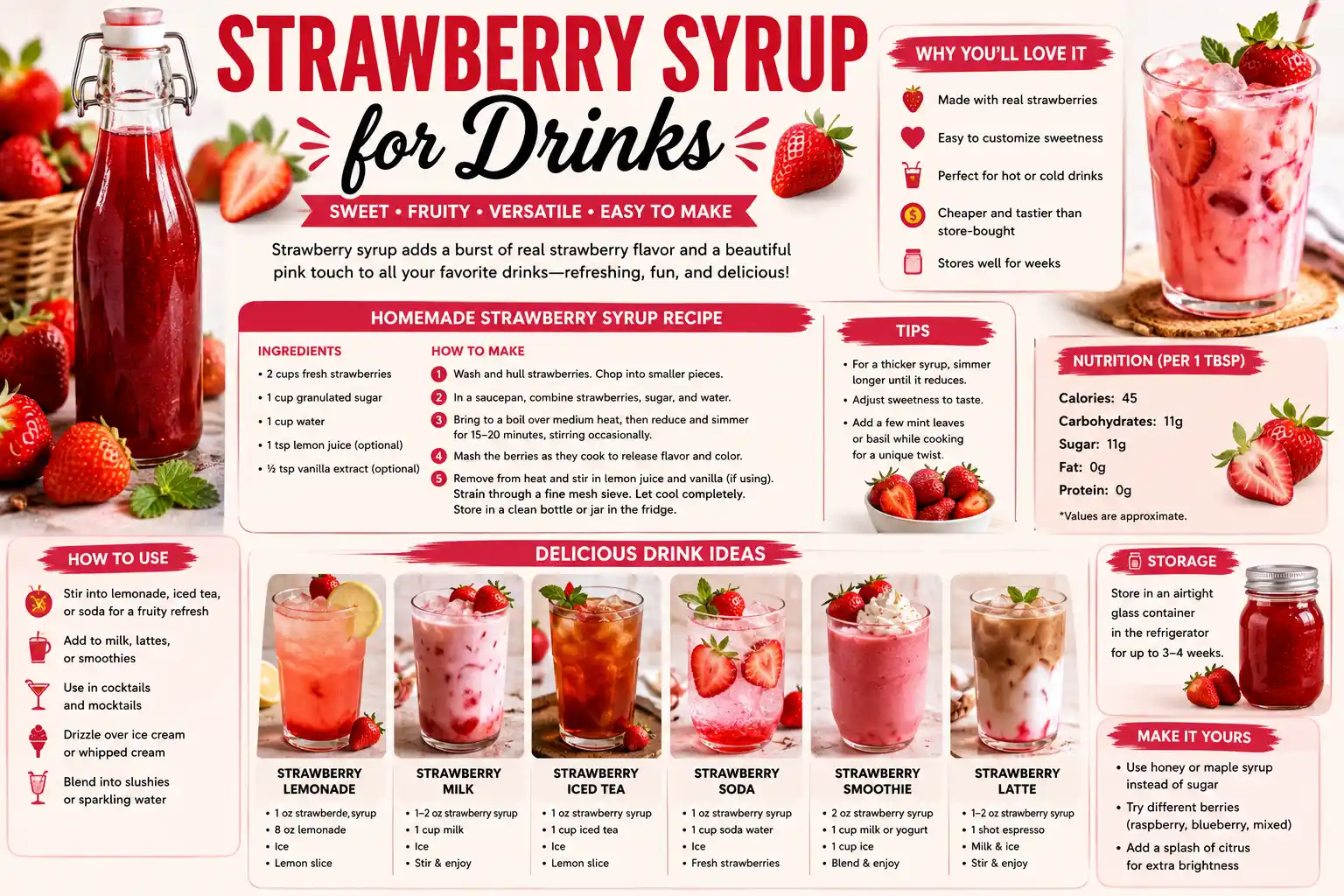
Making strawberry syrup for drinks is one of the easiest ways to turn ripe berries into something useful. A small batch can flavor lemonade, iced tea, coffee, matcha, milk, sparkling water, mocktails, and cocktails.
This recipe creates a smooth, pourable syrup rather than a thick pancake topping. You’ll also learn how to use fresh or frozen strawberries, control the sweetness, keep the syrup clear, and store it safely.
Quick Answer
To make homemade strawberry syrup for drinks, gently simmer strawberries, sugar, water, and lemon juice for 12 to 15 minutes. Strain the mixture, cool it, and use ½ to 1 ounce per drink, depending on the sweetness you prefer.
Key Takeaways
• Use ripe berries for the strongest natural strawberry flavor.
• Simmer gently instead of boiling the syrup aggressively.
• Don’t press the fruit if you want a clear syrup.
• Start with 1 tablespoon per 8-ounce drink.
• Refrigerate the cooled syrup in a clean, sealed container.
• Freeze extra syrup in small portions for later use.
Why This Strawberry Syrup Recipe Works
This recipe uses enough water to pull flavor from the strawberries without making the syrup weak. The sugar sweetens the fruit and gives the finished syrup a smooth, pourable body.
A small amount of lemon juice prevents the syrup from tasting flat. It sharpens the berry flavor without making the final result taste strongly of lemon.
What Makes It Different From Strawberry Sauce?
Strawberry drink syrup should be thin enough to dissolve in cold liquid. Strawberry sauce is usually thicker, pulpier, and better suited to pancakes, cheesecake, or ice cream.
| Type | Texture | Best Uses |
|---|---|---|
| Strawberry simple syrup | Thin and pourable | Soda, tea, cocktails and lemonade |
| Strawberry drink syrup | Slightly fuller but still smooth | Coffee, milk, matcha and mocktails |
| Strawberry puree | Thick and pulpy | Smoothies, frozen drinks and layered beverages |
| Strawberry sauce | Thick and spoonable | Pancakes, desserts and yogurt |
| Strawberry jam | Spreadable and set | Toast, pastries and fillings |
This recipe sits between a plain simple syrup and a thick fruit sauce. It carries real berry flavor while remaining easy to mix.
Ingredients and Equipment
You only need a few basic ingredients. The quality and ripeness of the strawberries will have the biggest effect on the finished flavor.
Ingredients
• 1 pound strawberries: About 450 grams, washed, hulled, and sliced
• ¾ cup granulated sugar: About 150 grams
• ¾ cup water: About 180 milliliters
• 1 tablespoon fresh lemon juice: Adds balance and brightness
• Small pinch of salt: Optional, but helps round out the sweetness
Fresh strawberries should be washed under plain running water before cutting. The FDA advises against washing produce with soap, detergent, or commercial produce wash.
Ingredient Substitutions
Frozen Strawberries
Use the same weight of unsweetened frozen strawberries. You don’t need to thaw them first, but they may take several extra minutes to soften.
Frozen berries often release more water than fresh fruit. Begin with ½ cup water, then add more only if the saucepan looks dry.
Sugar
Regular granulated sugar creates the cleanest flavor and most familiar syrup texture.
You can also use:
• Cane sugar for a similar result
• Light brown sugar for a deeper, caramel-like note
• Honey for a floral flavor
• Agave for a mild, neutral sweetness
• Maple syrup for coffee and fall-style drinks
Liquid sweeteners change the taste and body of the syrup. They should not always be substituted cup for cup.
Lemon Juice
Lime juice works well for margaritas, mojitos, limeade, and tropical drinks. Orange juice creates a softer, sweeter citrus note.
Equipment
• Medium saucepan
• Cutting board and paring knife
• Wooden spoon or heat-safe spatula
• Fine-mesh strainer
• Heat-safe measuring cup or bowl
• Clean glass jar or food-safe bottle
• Small funnel, optional
A nonreactive stainless steel or enameled saucepan is best. Avoid unlined reactive metals, which can affect acidic fruit mixtures.
How to Make Strawberry Syrup for Drinks
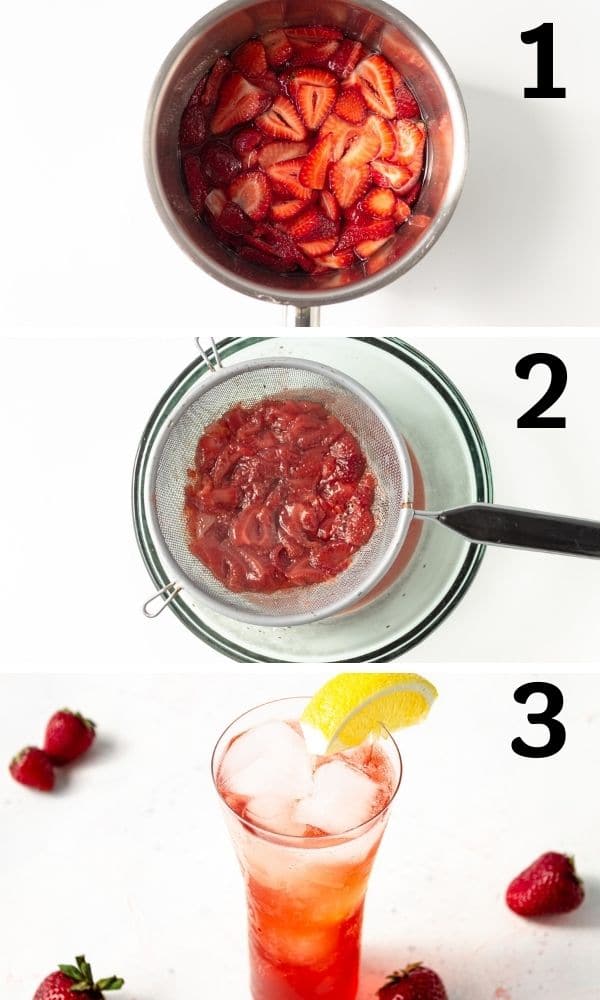
This recipe makes approximately 1 to 1¼ cups of syrup. The exact yield depends on the moisture in the fruit and how long you reduce it.
One batch provides roughly 16 to 20 one-tablespoon servings.
Recipe Details
| Detail | Amount |
|---|---|
| Preparation time | 10 minutes |
| Cooking time | 12–15 minutes |
| Cooling time | 30–60 minutes |
| Expected yield | 1 to 1¼ cups |
| Serving size | 1 tablespoon |
| Difficulty | Easy |
Step-by-Step Instructions
- Prepare the strawberries.
Wash the berries under running water. Remove the green tops and slice each berry into quarters or ½-inch pieces. - Combine the ingredients.
Place the strawberries, sugar, water, lemon juice, and salt in a medium saucepan. - Warm the mixture.
Set the pan over medium heat. Stir gently until the sugar begins to dissolve and the berries release juice. - Bring it to a gentle simmer.
Once small bubbles appear, lower the heat. Avoid a hard rolling boil, which can darken the syrup and mute the fresh berry flavor. - Cook for 12 to 15 minutes.
Stir every few minutes. The berries should become very soft, and the liquid should turn deep red. - Check the consistency.
Dip a clean spoon into the liquid. The syrup should lightly coat the spoon but still pour easily. - Strain the syrup.
Place a fine-mesh strainer over a heat-safe bowl. Pour in the strawberry mixture and let the liquid drain. - Choose clear or rustic syrup.
Leave the fruit undisturbed for a clearer syrup. Press gently with a spoon for a fuller yield and more fruit pulp. - Cool completely.
Let the syrup reach room temperature before transferring it to a clean jar. - Refrigerate.
Seal the container and store it in the refrigerator until ready to use.
What Should the Finished Syrup Look Like?
The syrup should be bright red, smooth, and thinner than pancake syrup. It will thicken slightly as it cools.
When stirred into cold water, it should disperse with only a few turns of a spoon. If it sinks to the bottom in a thick layer, it has probably reduced too far.
How to Make Clear or Full-Bodied Strawberry Syrup
Straining technique changes the appearance and texture more than most people expect. Neither method is wrong; the best choice depends on the drink.
For Clear Strawberry Syrup
Pour the mixture into a fine-mesh strainer and let it drain naturally. Do not mash or squeeze the cooked fruit.
This method creates a cleaner syrup for sparkling water, clear cocktails, iced tea, and layered drinks. Avoiding pressure on the berries helps limit pulp and cloudiness.
For Stronger, More Rustic Syrup
Press the cooked strawberries gently against the strainer with a spoon. This extracts more liquid and gives the syrup a fuller berry taste.
The finished syrup may be cloudy or contain fine pulp. That texture works well in lemonade, milk, coffee, smoothies, and frozen drinks.
For Extra-Clear Syrup
Strain the liquid a second time through damp cheesecloth or a coffee filter. This takes longer and may reduce the final yield.
Don’t use excessive pressure. Squeezing the cloth can push fine particles back into the syrup.
Don’t Throw Away the Cooked Fruit
The strained strawberries still have flavor. Use them in:
• Plain yogurt
• Overnight oats
• Toast or biscuits
• Smoothies
• Chia pudding
• Ice cream
• Oatmeal
Use the cooked fruit promptly and keep it refrigerated.
Fresh, Frozen, and No-Cook Strawberry Syrup
Each method produces a slightly different result. Choose based on the fruit you have and the flavor you want.
Fresh Strawberry Syrup
Fresh berries create the brightest aroma when they’re ripe, red, and fragrant. Avoid berries with mold, leaking juice, or fermented odors.
This method is best during strawberry season or when you have fruit that needs to be used soon.
Frozen Strawberry Syrup
Frozen strawberries provide dependable flavor throughout the year. They often create a darker, slightly more cooked-tasting syrup.
Use unsweetened frozen berries. Sweetened frozen fruit can make the final syrup too sugary and harder to balance.
No-Cook Strawberry Syrup
A cold-process syrup tastes more like fresh sliced strawberries. Instead of heating the fruit, sugar draws juice from the sliced berries during refrigerated maceration. A common cold-process method rests the fruit and sugar for 12 to 24 hours before straining.
Simple No-Cook Method
• Combine 12 ounces sliced strawberries with 6 ounces sugar.
• Place the mixture in a clean, sealed container.
• Refrigerate for 12 to 18 hours.
• Shake or stir the mixture several times.
• Strain when most of the sugar has dissolved.
• Keep refrigerated and use sooner than cooked syrup.
No-cook syrup has a lighter body and shorter practical storage life. It works especially well in lemonade, spritzers, mojitos, and fruit-forward mocktails.
Cooked vs No-Cook Strawberry Syrup
| Feature | Cooked Syrup | No-Cook Syrup |
|---|---|---|
| Flavor | Deeper and jam-like | Fresher and more floral |
| Color | Dark ruby red | Bright red |
| Preparation | About 25 minutes | 12–18 hours |
| Texture | Fuller and smoother | Light and thin |
| Best for | Coffee, tea, soda and cocktails | Lemonade, spritzers and mocktails |
| Storage | Longer practical refrigerator life | Use sooner |
How Much Strawberry Syrup Should You Add?
The best amount depends on the drink’s size and whether the base is already sweet. It’s easier to add more syrup than to correct an overly sweet drink.
Use the following ratios as a starting point.
| Drink Size | Light Flavor | Balanced Flavor | Sweet Flavor |
|---|---|---|---|
| 8 ounces | 2 teaspoons | 1 tablespoon | 1½ tablespoons |
| 12 ounces | 1 tablespoon | 1½ tablespoons | 2 tablespoons |
| 16 ounces | 1½ tablespoons | 2 tablespoons | 2½ tablespoons |
| 8-cup pitcher | ½ cup | ¾ cup | 1 cup |
How to Balance the Sweetness
If the drink tastes too sweet, add one of these:
• Fresh lemon or lime juice
• Plain sparkling water
• Unsweetened tea
• Cold coffee
• More milk
• Crushed ice
• A tiny pinch of salt
Acid is especially useful because it lifts the berry flavor while reducing the perception of heavy sweetness.
Best Drinks to Make With Strawberry Syrup

Instead of dozens of vague ideas, these measured recipes provide useful starting ratios. Adjust each one after tasting.
Strawberry Soda
This simple drink tastes fruity, fizzy, and lightly tart. It works for family meals, summer parties, and soda bars.
Ingredients
• 1 tablespoon strawberry syrup
• 1 teaspoon lemon juice
• 6 to 8 ounces chilled club soda
• Ice
• Fresh strawberry or lemon slice
Method
Fill a 12-ounce glass with ice. Add the syrup and lemon juice, then top with club soda. Stir gently.
Strawberry Lemonade
The lemon gives the syrup enough acidity to taste bright rather than candy-like.
Ingredients
• 1 tablespoon strawberry syrup
• 1½ tablespoons fresh lemon juice
• 6 ounces cold water
• Ice
• Lemon wheel, optional
Method
Stir the syrup and lemon juice together. Add water and ice, then taste and adjust.
Strawberry Iced Tea
Black tea creates a familiar fruit-tea flavor. Green tea or hibiscus can also work.
Ingredients
• 1 tablespoon strawberry syrup
• 8 ounces chilled unsweetened tea
• 1 teaspoon lemon juice
• Ice
Method
Pour everything over ice and stir. Use less syrup when the tea is already sweetened.
Strawberry Milk
This creamy drink suits breakfast, snacks, and family gatherings.
Ingredients
• 1 tablespoon strawberry syrup
• 8 ounces cold milk
• Ice, optional
Method
Stir or shake until the syrup is fully blended. Dairy milk, oat milk, soy milk, and coconut milk can all be used.
Check ingredient labels when serving anyone with dairy, soy, or nut allergies.
Strawberry Iced Latte
Strawberry pairs best with smooth espresso, milk, vanilla, or white chocolate.
Ingredients
• 1 tablespoon strawberry syrup
• 6 ounces milk
• 1 or 2 espresso shots
• Ice
Method
Add syrup to the glass first. Fill with ice and milk, then pour the espresso over the top.
Coffee contains caffeine. Choose decaf or limit the serving when caffeine sensitivity is a concern.
Strawberry Matcha Latte
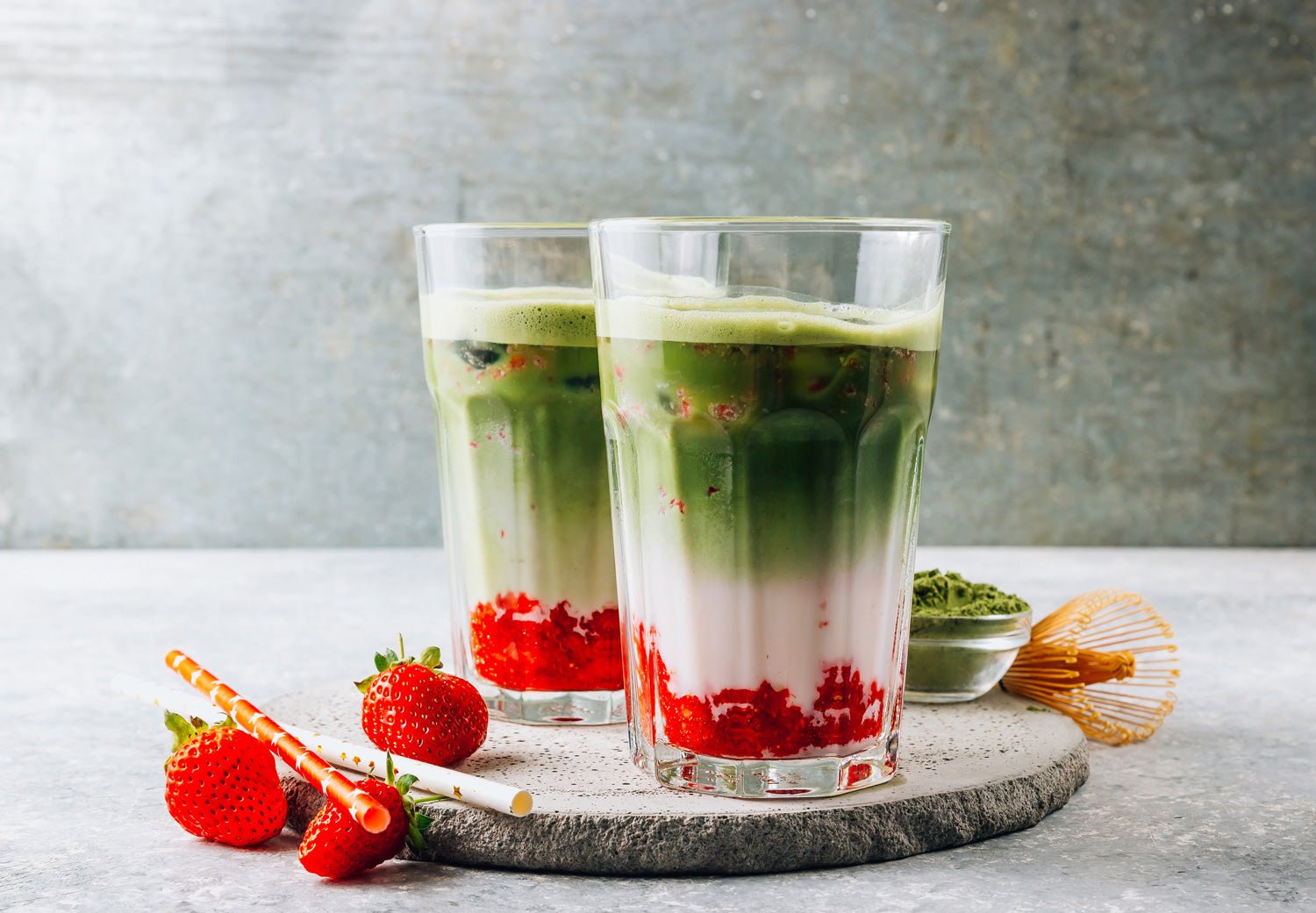
The fruit softens matcha’s earthy taste while creating an attractive layered drink.
Ingredients
• 1 tablespoon strawberry syrup
• 6 ounces milk
• 1 teaspoon matcha
• 2 ounces cool water
• Ice
Method
Add syrup, ice, and milk to a glass. Whisk the matcha with water, then pour it over the milk.
Strawberry Lime Mocktail
Lime and mint keep this alcohol-free drink crisp and balanced.
Ingredients
• 1 tablespoon strawberry syrup
• ¾ ounce fresh lime juice
• 6 mint leaves
• 4 to 6 ounces sparkling water
• Ice
Method
Gently press the mint with the lime juice. Add ice and syrup, then top with sparkling water.
Strawberry Cocktail for Adults
The syrup can replace plain simple syrup in many cocktails, including margaritas, daiquiris, Collins drinks, and whiskey sours.
For a basic strawberry vodka soda, combine:
• 1½ ounces vodka
• ¾ ounce strawberry syrup
• ½ ounce lemon juice
• 3 ounces soda water
• Ice
Shake the vodka, syrup, and lemon juice with ice. Strain over fresh ice and top with soda.
Alcoholic drinks are intended only for adults of legal drinking age. Measure servings carefully and drink responsibly.
Flavor Variations and Lower-Sugar Options
Once you understand the basic method, you can adjust the syrup for different drinks and seasons.
Strawberry Basil Syrup
Add 4 to 6 basil leaves during the final three minutes of cooking. Strain them out with the berries.
This variation works well in lemonade, gin drinks, mocktails, and sparkling water.
Strawberry Mint Syrup
Add a small handful of mint after removing the saucepan from the heat. Steep for five minutes, then strain.
Long steeping can make mint taste grassy or bitter.
Strawberry Vanilla Syrup
Stir in ½ teaspoon vanilla extract after straining. Vanilla works well in milk, coffee, milkshakes, and cream soda.
Strawberry Ginger Syrup
Add three or four thin slices of fresh ginger during cooking. Remove them before bottling.
This syrup pairs well with lime, ginger beer, black tea, and sparkling water.
Strawberry-Lime Syrup
Replace the lemon juice with fresh lime juice. Add a strip of lime peel during the last five minutes of cooking.
Avoid the bitter white pith.
Strawberry-Rosemary Syrup
Add one small rosemary sprig during the last two minutes of cooking. Remove it quickly so the herb doesn’t overpower the fruit.
Lower-Sugar Strawberry Syrup
Reduce the granulated sugar from ¾ cup to ½ cup. The syrup will be thinner and less sweet.
Lower-sugar syrup should be treated as a fresh refrigerated product. Make a smaller batch and use it promptly.
Alternative Sweeteners
Honey, maple syrup, and agave can sweeten strawberry syrup, but they change the final taste.
For better control, replace only half the granulated sugar at first. Adjust future batches after tasting the cooled syrup in an actual drink.
Storage, Freezing, and Canning Safety

Let the syrup cool before sealing it. Pouring very hot syrup into a tightly closed refrigerated container can create condensation and affect quality.
Refrigerator Storage
Transfer the cooled syrup to a clean, airtight bottle or jar. Keep it refrigerated at 40°F or below, which is the standard safe refrigerator temperature.
For best quality, use homemade strawberry syrup within seven days. Some high-sugar recipes may remain acceptable longer, but home recipes vary in acidity, sugar concentration, handling, and water content.
Discard the syrup if you notice:
• Mold
• Fizzing or unexpected bubbles
• Fermented or alcoholic odor
• Slimy texture
• Bulging container lid
• Unusual color changes
Never taste questionable syrup to determine whether it is safe.
Freezing
Freeze syrup in:
• Small freezer-safe containers
• Silicone ice cube trays
• Sealed freezer bags laid flat
• Small glass jars rated for freezing
Leave room for expansion. For best flavor and quality, use frozen syrup within about two months. Similar refrigerator and freezer guidance appears in established strawberry syrup recipes from Preppy Kitchen and Fifteen Spatulas.
Thaw the syrup in the refrigerator and stir before using.
Can You Can This Strawberry Syrup?
Do not place this refrigerator recipe in a pantry simply because the syrup was poured into a canning jar. A sealed jar is not automatically shelf-stable.
For shelf-stable berry syrup, use a tested canning recipe with the stated fruit quantity, sugar level, jar size, headspace, processing time, and altitude adjustment. The National Center for Home Food Preservation publishes a tested berry-syrup method with boiling-water processing instructions.
Do not reduce sugar or change jar sizes in a tested preservation recipe unless the source specifically allows it.
Troubleshooting Strawberry Syrup
Small differences in fruit ripeness, heat, saucepan size, and cooking time can change the result. Most problems are easy to correct.
The Syrup Is Too Thin
Return it to the saucepan and simmer gently for two to five minutes. Remember that it will become slightly thicker after cooling.
Avoid reducing it until it resembles jam. Drink syrup should remain easy to pour.
The Syrup Is Too Thick
Warm the syrup over low heat. Stir in water one tablespoon at a time until it reaches the desired texture.
The Syrup Is Too Sweet
Add fresh lemon or lime juice in small amounts. You can also correct the sweetness when building the drink by adding more unsweetened liquid.
The Syrup Is Too Tart
Stir in a small amount of sugar while the syrup is warm. Add one tablespoon at a time and taste after it dissolves.
The Strawberry Flavor Is Weak
Possible causes include underripe fruit, too much water, or insufficient cooking.
Simmer the strained syrup for several extra minutes, or blend it with a small amount of fresh strawberry puree for pulpy drinks.
The Syrup Is Cloudy
Cloudiness usually comes from pressing the fruit, using a coarse strainer, or stirring the berries aggressively.
Strain the syrup again through damp cheesecloth if appearance matters. Cloudiness alone does not mean the syrup is spoiled.
The Syrup Turned Brown
The heat may have been too high, or the syrup may have cooked too long. Old or bruised berries can also produce a duller color.
Use moderate heat and remove the syrup once it turns deep red.
Sugar Crystals Formed
Warm the syrup gently with one or two tablespoons of water. Stir until the crystals dissolve.
Wipe sugar from the sides of the saucepan during cooking to prevent crystals from forming.
Expert Recipe Notes and Common Mistakes
The best strawberry syrup is not always the thickest or sweetest. It should suit the drink where it will be used.
Use Weight When Possible
A cup of whole strawberries can vary widely in weight. Measuring 450 grams or 1 pound gives more repeatable results.
Taste the Cooled Syrup
Warm syrup tastes sweeter and thinner than refrigerated syrup. Chill a spoonful before deciding whether the batch needs adjustment.
Judge It Inside a Drink
Syrup can taste too strong on its own but balanced once diluted. Test one tablespoon in sparkling water before changing the entire batch.
Don’t Overcook the Berries
Long cooking creates a jam-like flavor and can darken the color. Stop when the fruit is soft and the liquid is deep red.
Don’t Make It Too Thick
A thick syrup is hard to blend into iced drinks. It may settle at the bottom of cold milk, tea, or soda.
Add Delicate Herbs Late
Mint, basil, and rosemary can become bitter or medicinal when simmered too long. Add them near the end or steep them off the heat.
Make Separate Family and Adult Bases
For parties, prepare the strawberry lemonade, limeade, or soda without alcohol. Adults can add measured spirits to individual glasses.
This keeps the main pitcher family-friendly and prevents accidental alcohol service.
Frequently Asked Questions
How Long Does Homemade Strawberry Syrup Last?
For best quality and cautious home use, refrigerate the syrup and use it within seven days. Reduced-sugar and no-cook versions should be used sooner.
Discard any batch that develops mold, fizzing, a fermented odor, or an unusual texture.
Can I Use Frozen Strawberries?
Yes. Use the same weight of unsweetened frozen strawberries.
Begin with less water because frozen fruit often releases plenty of liquid as it heats.
Should I Mash the Strawberries?
Light mashing creates a stronger, pulpier syrup. Leaving the berries mostly undisturbed produces a clearer result.
Choose based on whether you value clarity or maximum fruit extraction.
What Is the Best Sugar-to-Water Ratio?
For a fruit-forward drink syrup, ¾ cup sugar to ¾ cup water works well with one pound of strawberries.
You can increase the water for a thinner simple syrup or reduce it for a more concentrated mixer.
Can I Make Strawberry Syrup Without Refined Sugar?
Yes, but honey, maple syrup, and agave change the flavor and texture.
Start by replacing half the granulated sugar rather than all of it. Keep the finished syrup refrigerated.
How Many Drinks Does One Batch Make?
A batch yielding 1 to 1¼ cups provides about 16 to 20 drinks when using one tablespoon per serving.
Large, tart, or unsweetened drinks may need up to two tablespoons.
Can I Use Strawberry Tops?
Clean strawberry tops can be used in infused water or certain zero-waste syrup methods. However, they contribute less fruit flesh and may create a greener, more herbal flavor.
Wash the strawberries before removing the tops, and discard any leaves or fruit showing mold or decay.
Can I Leave Strawberry Syrup at Room Temperature?
No. This homemade recipe is designed for refrigeration, not pantry storage.
Refrigerate it after cooling and use a tested preservation recipe when shelf-stable syrup is required.
Why Did My Syrup Ferment?
Fermentation can occur when yeast enters the syrup or when it remains warm for too long. Low-sugar and no-cook syrups may spoil more quickly.
Discard fermented syrup rather than trying to recook or rescue it.
Conclusion
Homemade strawberry syrup for drinks gives you more control over flavor, sweetness, and ingredients than many bottled options. One simple batch can flavor soda, lemonade, tea, coffee, matcha, milk, mocktails, and cocktails.
Start with one tablespoon per drink and adjust after tasting. Once you master the basic recipe, try a basil, vanilla, ginger, or lime variation to create your own signature strawberry drink.