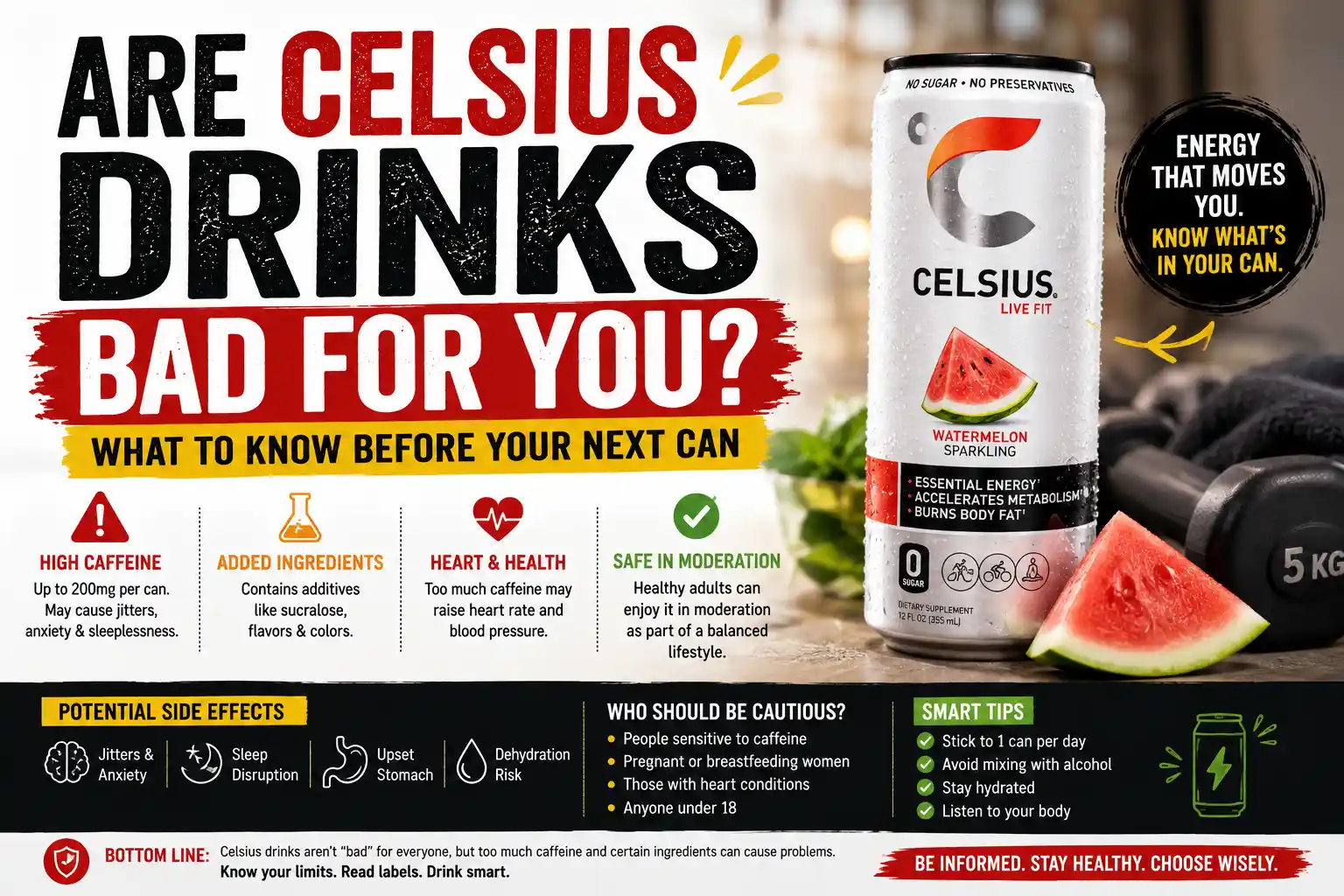
Are Celsius Drinks Bad for You? 2026 Safety, Side Effects & Caffeine Guide
Celsius is sugar-free and fitness-focused, but a standard can still delivers a substantial caffeine dose. Here is what that means for side effects, sleep, heart health, workouts, pregnancy, and daily use.
Celsius may look like a lighter alternative to traditional energy drinks. Most varieties have zero sugar, bright fruit flavors, and fitness-focused packaging.
However, the main health concern is not sugar. It is the high caffeine content. One standard Celsius contains 200 milligrams of caffeine, while Celsius Essentials contains 270 milligrams. That can be a large dose for one sitting.
For some healthy adults, an occasional can may fit within a moderate caffeine intake. For others, even one can may cause jitters, anxiety, heart palpitations, nausea, headaches, or poor sleep.
Quick Answer
Celsius drinks are not automatically bad for every healthy adult, but they are highly caffeinated. A standard can provides 200 milligrams of caffeine, equal to half the FDA’s general daily benchmark for most adults.
Celsius may be a poor choice for children, teenagers, pregnant people, caffeine-sensitive adults, and people with certain heart, blood pressure, anxiety, or sleep conditions.
TL;DR
- Standard Celsius cans contain 200 milligrams of caffeine.
- Celsius Essentials contains 270 milligrams per can.
- Two standard cans reach the FDA’s 400-milligram daily benchmark.
- One can may cause anxiety, palpitations, nausea, or sleep problems.
- Children and teenagers should avoid caffeinated energy drinks.
- Celsius Hydration powder is caffeine-free but is a different product.
- Count coffee, tea, supplements, and medications in your caffeine total.
Are Celsius Drinks Actually Bad for You?
For most healthy adults, one occasional Celsius is unlikely to be inherently dangerous. The answer changes when you consider dose, frequency, caffeine tolerance, medications, and existing health conditions.
The FDA cites 400 milligrams of caffeine per day as an amount not generally associated with negative effects for most adults. This is a broad reference point, not a personal guarantee of safety. Some people develop symptoms after much smaller amounts.
A person who drinks one standard Celsius consumes 200 milligrams at once. That is a moderate-to-high single dose, especially for someone who normally drinks little caffeine.
Celsius itself says its products are safe for most consumers when used as directed. The company recommends no more than two standard cans or one Celsius Essentials can per day. That is the manufacturer’s position, not personalized medical advice.
Celsius May Be Lower Risk When You:
- Are a healthy adult
- Tolerate caffeine without unpleasant symptoms
- Drink no other major caffeine sources that day
- Consume only one standard can
- Avoid drinking it near bedtime
- Do not combine it with stimulant supplements
- Eat regular meals and drink enough water
- Do not have a condition affected by caffeine
Celsius May Be Higher Risk When You:
- Drink several cans in one day
- Combine it with coffee or pre-workout powder
- Choose the 270-milligram Essentials line
- Drink it quickly on an empty stomach
- Use it to replace sleep or meals
- Have anxiety, panic attacks, or insomnia
- Have high blood pressure or a heart condition
- Take medication that may interact with caffeine
How Much Caffeine Is in Celsius?
Caffeine levels vary across the Celsius product range. This matters because products with similar branding may have very different stimulant levels.
According to Celsius, its standard beverages, Vibe flavors, Essentials drinks, On-The-Go packets, and Hydration products contain the following amounts.
| Celsius Product | Caffeine Per Serving | Share of 400 mg |
|---|---|---|
| Celsius and Celsius Vibe | 200 mg | 50% |
| Celsius Essentials | 270 mg | 67.5% |
| Celsius On-The-Go powder | 200 mg | 50% |
| Celsius Hydration powder | 0 mg | 0% |
The FDA reports that a typical 12-ounce energy drink contains about 41 to 246 milligrams of caffeine. Standard Celsius sits near the upper end of that range. Celsius Essentials exceeds it.
Why One Can Can Be More Caffeine Than It Seems
A standard Celsius does not exceed the FDA’s 400-milligram reference point by itself. However, it can consume half your daily caffeine allowance in one sitting.
Your total may climb quickly when other drinks and products are included.
| Daily Combination | Estimated Total Caffeine |
|---|---|
| One standard Celsius | 200 mg |
| One Celsius Essentials | 270 mg |
| Two standard Celsius cans | 400 mg |
| Standard Celsius plus 12-ounce coffee | 313–447 mg |
| Celsius Essentials plus 12-ounce coffee | 383–517 mg |
| Standard Celsius plus 200 mg pre-workout | 400 mg |
Coffee caffeine varies by bean, serving size, and brewing method. The FDA gives a range of 113 to 247 milligrams for a typical 12-ounce brewed coffee.
What Happens After You Drink Celsius?
Celsius primarily makes you feel more alert because of caffeine. Caffeine blocks adenosine receptors in the brain. Adenosine normally helps build feelings of tiredness during the day.
Caffeine may improve alertness, attention, and exercise performance in some people. It does not create new physical energy or replace calories, sleep, hydration, or adequate nutrition.
Blood caffeine levels generally peak about 30 to 120 minutes after consumption. The average half-life is roughly four to six hours, although it may range from 1.5 to 10 hours between adults.
Simple Half-Life Example
A half-life of five hours means that five hours after consuming 200 milligrams, about 100 milligrams may remain in your body. Five hours later, about 50 milligrams may remain.
Genetics, pregnancy, medications, smoking status, liver function, and regular caffeine use may affect how quickly caffeine is processed.
Possible Short-Term Effects
- Increased alertness
- Reduced feelings of fatigue
- Greater focus for some users
- Improved exercise performance in some situations
- Temporary rise in heart rate
- Temporary rise in blood pressure
- Increased urination
- Reduced appetite
- Trouble relaxing
- Delayed sleep later in the day
What Are the Most Common Celsius Side Effects?
Most reported concerns are consistent with caffeine side effects rather than a problem unique to Celsius.
The FDA lists increased heart rate, palpitations, high blood pressure, anxiety, jitters, insomnia, headache, nausea, and stomach upset as possible signs of consuming too much caffeine.
Common Side Effects
- Jitters: Shaking or restless feelings, especially in sensitive users
- Anxiety: Racing thoughts, nervousness, or physical tension
- Heart palpitations: A pounding, fluttering, or unusually noticeable heartbeat
- Headaches: Caused by excess caffeine or later withdrawal
- Nausea: More likely when consumed quickly or without food
- Stomach discomfort: Caffeine and acidic ingredients may irritate some stomachs
- Insomnia: Difficulty falling asleep or staying asleep
- Dizziness: Possible after a large or poorly tolerated dose
- Frequent urination: Caffeine can temporarily increase urine production
- Irritability: Especially as the stimulant effect wears off
Is It Bad to Drink Celsius Every Day?
Drinking Celsius every day is not automatically harmful for every adult. However, daily use leaves less room for other caffeine sources and may increase dependence, tolerance, sleep problems, or recurring side effects.
The manufacturer says daily consumption is safe for most consumers when products are used as directed. It recommends beginners use no more than one Celsius product within 24 hours.
That advice still needs personal context. Someone who drinks a standard Celsius every morning and no other caffeine may remain under 400 milligrams. Someone who adds coffee, tea, chocolate, pre-workout powder, or caffeine-containing medication may exceed it.
Ask These Questions Before Making It a Daily Habit
- Do you need more caffeine to get the same effect?
- Do you develop headaches when you skip it?
- Is your sleep becoming shorter or less restful?
- Do you feel anxious, shaky, or nauseated afterward?
- Are you using it instead of eating breakfast?
- Are you combining it with coffee or pre-workout?
- Has your blood pressure increased?
- Do you feel unable to work without caffeine?
Regular caffeine use can lead to tolerance and withdrawal. Withdrawal symptoms may include headache, drowsiness, irritability, and reduced concentration. They may begin 12 to 24 hours after the last caffeine dose.
A Better Test Than “Is It Under 400 Milligrams?”
The 400-milligram figure is not a target to reach every day. It is a general upper reference for most adults.
Your useful limit may be much lower if caffeine causes:
- Anxiety
- Poor sleep
- Palpitations
- Reflux
- Migraines
- Tremors
- Blood pressure changes
- Stomach discomfort
Can Celsius Affect Your Heart or Blood Pressure?
Caffeine can temporarily increase heart rate and blood pressure. It may also cause a pounding or fluttering heartbeat in sensitive people.
These effects do not mean that one can causes permanent heart disease. However, they can become concerning when caffeine intake is high, several stimulant products are combined, or the user has an underlying cardiovascular condition.
Research on energy drinks suggests that large servings may affect blood pressure and heart electrical activity differently from caffeine alone. However, many studies use larger volumes or different formulas, so their findings cannot be applied directly to one Celsius can.
A recent extreme case involved a man who reportedly consumed about eight energy drinks and 1,200 milligrams of caffeine daily before experiencing dangerously high blood pressure and a stroke. His intake was far beyond normal use and should not be treated as evidence that one can produces the same outcome.
Be Extra Careful if You Have:
- An abnormal heart rhythm
- Uncontrolled high blood pressure
- A history of fainting
- Structural heart disease
- Frequent unexplained palpitations
- Chest pain during exercise
- A family history of sudden cardiac problems
- Medication that affects heart rate or blood pressure
Discuss energy drinks with a healthcare professional if any of these apply.
Can Celsius Make Anxiety or Sleep Problems Worse?
Caffeine can create physical sensations similar to anxiety. These may include a racing heart, trembling, sweating, restlessness, and rapid breathing.
People with anxiety or panic disorders may interpret these sensations as danger, which can intensify distress. A dose that feels pleasant to one person may feel overwhelming to another.
Caffeine also remains in the body for hours. A Celsius consumed in the afternoon may still affect the nervous system at bedtime.
Research has found that caffeine taken even six hours before bed can reduce sleep time. The average caffeine half-life is four to six hours, but some people process it much more slowly.
Reduce Sleep Problems by:
- Drinking Celsius early in the day
- Avoiding caffeine at least six hours before bed
- Stopping after lunch if you are very sensitive
- Counting caffeine from coffee, tea, soda, and chocolate
- Avoiding Celsius after a poor night’s sleep
- Not using caffeine to repeatedly compensate for insomnia
- Choosing caffeine-free Celsius Hydration instead
- Reducing intake gradually rather than stopping suddenly
What Ingredients Are in Celsius?
Celsius formulas vary, so always check the can or packet you are buying. Ingredients and amounts may change.
Standard products commonly highlight green tea extract, guarana seed extract, ginger, chromium, vitamin C, and B vitamins. Essentials products also promote amino acids.
| Ingredient | What It Means for Consumers |
|---|---|
| Caffeine | The primary stimulant and main source of common side effects |
| Guarana extract | A plant-based source of additional caffeine |
| Green tea extract | Contains plant compounds and may also contribute caffeine |
| B vitamins | Support normal metabolism but do not replace food or sleep |
| Vitamin C | An essential nutrient, but more is not always better |
| Ginger extract | Used for flavor and within the branded ingredient blend |
| Chromium | An essential trace mineral included in standard formulas |
| Amino acids | Included in the Celsius Essentials product line |
| Nonnutritive sweeteners | Create sweetness without regular added sugar |
| Citric acid | Adds tartness and acidity |
Is “Natural Caffeine” Safer?
No meaningful safety advantage comes simply from describing caffeine as natural.
The FDA states that the body does not handle naturally occurring caffeine differently from added caffeine. Caffeine from guarana, tea, coffee, or another source still contributes to your total dose.
Is Guarana a Second Stimulant?
Guarana is a plant ingredient that contains caffeine. Consumers sometimes count “caffeine” and “guarana” separately without realizing the final labeled caffeine total should include all sources.
Celsius reports that part of its caffeine comes from guarana extract. The key number is still the product’s total caffeine per serving.
Is Cyanocobalamin Dangerous?
Cyanocobalamin is a common form of vitamin B12. Viral claims have sometimes focused on the “cyano” part of its name.
The presence of cyanocobalamin does not mean the drink contains a dangerous dose of cyanide. The Celsius manufacturer cites FDA and National Institutes of Health information supporting cyanocobalamin’s approved use.
The more relevant everyday concern for most Celsius users remains caffeine dose, not vitamin B12.
Does Zero Sugar Make Celsius Healthy?
Celsius being sugar-free can be useful for people trying to avoid added sugar. It may also prevent the rapid blood-sugar rise caused by heavily sweetened energy drinks.
However, zero sugar does not mean zero risk. It does not reduce the 200 or 270 milligrams of caffeine in the caffeinated product lines.
A drink can be low in sugar yet still cause:
- Jitters
- Palpitations
- Anxiety
- Headaches
- Nausea
- Sleep disruption
- Caffeine tolerance
- Caffeine withdrawal
Sugar-free also does not make Celsius a replacement for water. Standard Celsius is an energy drink. Celsius Hydration is a separate caffeine-free powder marketed for hydration.
Does Celsius Help With Weight Loss?
Celsius markets several ingredients around metabolism and thermogenesis. A temporary increase in alertness or energy expenditure is not the same as meaningful, lasting fat loss.
No energy drink can replace a consistent calorie balance, nutritious meals, regular activity, sleep, and sustainable habits.
Caffeine may also temporarily reduce appetite. That can become unhelpful when someone uses Celsius instead of eating.
Celsius Should Not Be Used To:
- Skip meals
- Suppress hunger all day
- Replace breakfast
- Compensate for little sleep
- “Burn off” overeating
- Treat low energy caused by under-eating
- Replace medical evaluation for chronic fatigue
- Promise rapid weight loss
If you regularly need caffeine to avoid eating or to push through extreme fatigue, the underlying routine deserves attention.
Who Should Avoid or Limit Celsius?
Some groups are more likely to experience harm or have lower recommended caffeine limits.
The FDA advises that medical conditions, medications, pregnancy, and individual sensitivity may change how much caffeine is appropriate. It also states that medical experts advise against energy drinks for children and teenagers.
Children and Teenagers
Children and teenagers should avoid caffeinated energy drinks. Young people may be more vulnerable to sleep problems, anxiety, rapid heart rate, palpitations, and blood pressure changes.
A standard Celsius contains more caffeine than many common coffees and soft drinks. It should not be treated as a sports drink for young athletes.
Pregnant People
A standard Celsius provides 200 milligrams of caffeine, which equals the commonly cited daily pregnancy limit from the American College of Obstetricians and Gynecologists.
Because that single can uses the full amount before coffee, tea, chocolate, or medication is counted, pregnant people should discuss it with their healthcare professional. Many experts recommend avoiding energy drinks during pregnancy because of their caffeine level and added ingredient blends.
Breastfeeding People
Caffeine can pass into breast milk. Infants may differ in how well they tolerate it.
Ask a healthcare professional about an appropriate personal limit, especially if the baby becomes restless or sleeps poorly.
People With Anxiety or Panic Disorders
Caffeine may worsen nervousness, trembling, racing thoughts, and panic-like physical sensations.
A lower-caffeine drink may be more comfortable than a 200- or 270-milligram energy drink.
People With Heart or Blood Pressure Conditions
People with arrhythmias, uncontrolled hypertension, frequent palpitations, or other heart conditions should seek personalized advice before using energy drinks.
People Taking Certain Medications
Caffeine can interact with medications and supplements. Possible concerns include stimulant prescriptions, products that affect heart rate, and other caffeine-containing treatments.
A pharmacist can review your specific products rather than relying on a general list.
Is Celsius Safe Before a Workout?
Caffeine can improve exercise performance for some people. Research commonly finds benefits around 3 to 6 milligrams per kilogram of body weight, although lower doses may also work.
Higher doses increase the likelihood of side effects and are not required for a performance benefit. Responses vary widely between athletes.
For a 150-pound person, a standard 200-milligram Celsius provides about 2.9 milligrams per kilogram. Celsius Essentials provides about 4 milligrams per kilogram.
That does not mean every person needs or should use that dose.
Possible Workout Benefits
- Greater alertness
- Lower perceived effort
- Improved endurance for some athletes
- Better attention during training
- Improved power or strength in some situations
Possible Workout Problems
- Racing heart
- Nausea during intense movement
- Shakiness
- Anxiety
- Headache
- Poor pacing because fatigue feels reduced
- Sleep disruption after evening training
- Excess caffeine when combined with pre-workout
Safer Pre-Workout Practices
- Do not combine Celsius with another caffeinated pre-workout
- Test tolerance during normal training, not competition day
- Avoid trying it before exercising in extreme heat
- Eat an appropriate meal or snack
- Drink water before and during exercise
- Stop if you develop chest pain, faintness, or severe palpitations
- Avoid late-evening use
- Do not give it to young athletes
Is Celsius Worse Than Coffee?
Celsius is not automatically worse than coffee. The healthier choice depends on dose, serving size, ingredients, timing, and personal response.
One advantage of Celsius is that the total caffeine amount is clearly stated. Coffee strength varies widely.
| Factor | Standard Celsius | Brewed Coffee |
|---|---|---|
| Typical caffeine | 200 mg per can | 113–247 mg per 12 ounces |
| Sugar | Usually zero | Zero unless added |
| Sweeteners | Often included | Optional |
| Ingredient blend | Multiple extracts and vitamins | Mainly coffee and water |
| Serving speed | Often consumed cold and quickly | Often sipped slowly |
| Adjustable strength | Limited | Easier to dilute or choose smaller |
| Caffeine-free option | Celsius Hydration only | Decaf coffee available |
| Main concern | High fixed caffeine dose | Variable serving size and additions |
The FDA notes that natural and added caffeine are handled similarly by the body. Coffee is not safer merely because its caffeine occurs naturally. Celsius is not safer merely because its caffeine comes partly from plant extracts.
Coffee may be easier to customize. You can choose half-caf, decaf, a smaller serving, or a weaker brew. A sealed Celsius can provides a fixed dose unless you save part for later.
How to Drink Celsius More Safely
The safest approach is not simply staying below 400 milligrams. It is using the lowest amount that gives the desired effect without causing symptoms.
Use This Practical Checklist
- Read the caffeine amount before drinking
- Choose standard Celsius over Essentials for a lower dose
- Start with half a can if you are caffeine-sensitive
- Avoid using Celsius as your first caffeine experience
- Count caffeine from every food, drink, medicine, and supplement
- Do not combine it with caffeine pills or pre-workout powder
- Avoid drinking it on an empty stomach if it causes nausea
- Drink it early enough to protect your sleep
- Do not mix it with alcohol
- Eat regular meals
- Drink water throughout the day
- Stop using it if you repeatedly develop palpitations or anxiety
- Reduce daily caffeine gradually if withdrawal headaches occur
- Discuss regular use with a professional if you have a medical condition
A Simple Personal Caffeine Budget
Suppose your daily limit is 300 milligrams because higher amounts disturb your sleep.
A 200-milligram Celsius leaves only 100 milligrams for coffee, tea, chocolate, medication, and supplements.
A 270-milligram Celsius Essentials leaves only 30 milligrams.
Planning around your personal limit is more useful than adding caffeine after symptoms appear.
Better Alternatives to Celsius
The right alternative depends on why you are reaching for an energy drink.
For Morning Alertness
- A smaller coffee
- Half-caf coffee
- Black tea
- Green tea
- Unsweetened iced tea
For Workout Hydration
- Water
- Water with a small amount of fruit juice
- A caffeine-free electrolyte drink
- Celsius Hydration powder
- Milk after training when appropriate
For Afternoon Fatigue
- Water and a balanced snack
- Fruit with yogurt
- Whole-grain toast with nut butter
- A short walk
- A brief rest period
- An earlier bedtime
For Flavor Without Caffeine
- Flavored sparkling water
- Caffeine-free herbal tea
- Fruit-infused water
- Diluted juice
- Homemade citrus water
- A caffeine-free mocktail
Persistent fatigue can have many causes. Caffeine may hide the symptom without solving the reason behind it.
Frequently Asked Questions
Can One Celsius Cause Heart Palpitations?
Yes. One Celsius can cause palpitations in a caffeine-sensitive person, even when the dose is below 400 milligrams.
Stop drinking it if you develop a pounding or irregular heartbeat. Seek urgent help for palpitations with chest pain, fainting, breathing trouble, or severe dizziness.
Is One Celsius a Day Too Much?
One standard can may fit within a healthy adult’s caffeine intake. However, it still provides 200 milligrams, before coffee, tea, chocolate, supplements, or medication are counted.
Daily use may be too much when it affects sleep, anxiety, blood pressure, digestion, or caffeine dependence.
Can Celsius Damage Your Kidneys or Liver?
There is no strong evidence that one Celsius used as directed directly causes kidney or liver damage in healthy adults. The manufacturer states that its products are not known to cause such damage when consumed as recommended.
Case reports have linked excessive energy-drink intake with kidney or liver injury, but these usually involve heavy consumption or other risk factors. They do not prove that normal Celsius use causes organ damage.
Why Does Celsius Make Me Feel Shaky?
The most likely reason is the high caffeine dose. A standard Celsius provides 200 milligrams, while Essentials provides 270 milligrams.
Shakiness may become stronger when you drink it quickly, consume it without food, combine it with coffee, or have low caffeine tolerance.
Can Teenagers Drink Celsius?
Caffeinated Celsius products are not recommended for children or teenagers. The FDA reports that medical experts advise against energy drinks for young people.
Celsius Hydration is caffeine-free, but parents should still check its full label and serving instructions.
Is Celsius Safe During Pregnancy?
A standard Celsius contains 200 milligrams of caffeine. That equals the commonly recommended daily pregnancy limit before other caffeine sources are included.
Pregnant people should ask their healthcare professional before drinking Celsius. Avoid assuming that “zero sugar” makes an energy drink pregnancy-safe.
Was Celsius Recalled for Containing Alcohol?
A limited recall was announced on July 30, 2025, after some cans labeled as Celsius Astro Vibe were mistakenly filled with High Noon vodka seltzer.
The problem involved a packaging supplier and specific production lots. It did not mean the regular Celsius formula secretly contained alcohol. No illnesses were reported at the time of the recall announcement.
Conclusion
Key Sources
- Celsius Essential Facts and current product information.
- U.S. Food and Drug Administration guidance on caffeine intake and side effects.
- National Capital Poison Center guidance on caffeine safety and overdose.
- MedlinePlus caffeine overdose guidance.
- International Society of Sports Nutrition position on caffeine and exercise.
Editorial note: Product formulas, caffeine amounts, guidance, and recalls can change. Re-check primary sources before publishing time-sensitive claims.