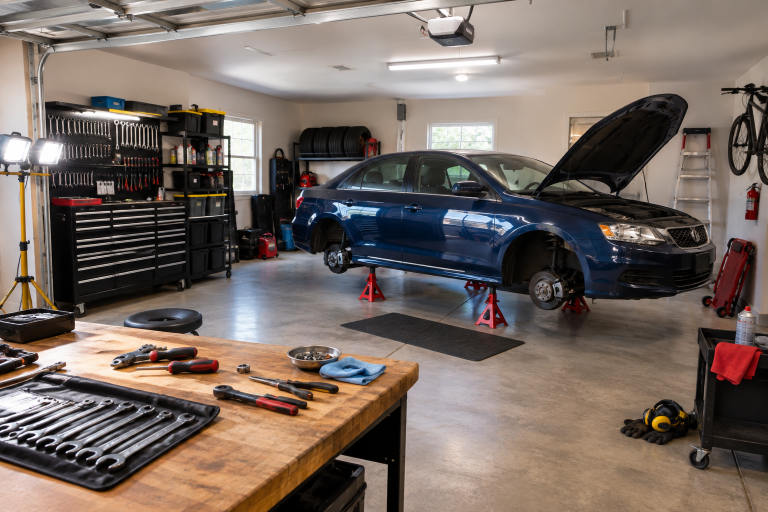
A useful automotive tool kit is not the biggest kit you can buy. It is a collection of reliable tools that match the work you actually plan to do. Whether you handle oil changes, tire checks, brake service, or small repairs, starting with practical essentials helps prevent wasted purchases. A focused selection from Val’s Tools Shop can help you build around real maintenance needs instead of filling a cart with tools that never leave the case.
The right equipment also makes jobs safer and less frustrating. A correctly sized socket is less likely to damage a fastener, a torque wrench helps you follow vehicle specifications, and good lighting makes it easier to spot leaks, worn parts, and loose connections.
Why a Practical Tool Kit Matters
A well-chosen kit saves time because each item has a purpose. It also helps avoid common problems, such as rounding fasteners with an ill-fitting wrench or overtightening wheel hardware without a torque wrench. For most owners, a compact setup of dependable hand tools, safety gear, and basic diagnostic equipment is more useful than a huge set dominated by duplicate bits and specialty pieces.
Start With Your Real Needs
Buy tools for the jobs you expect to perform, not for every possible repair. Check your owner’s manual, look at the fasteners on your vehicle, and consider where you will work. A driveway setup may need portable storage and a bright rechargeable light, while a garage can support a larger chest and more equipment.
Questions to Ask First
- Will you perform basic maintenance, occasional repairs, or larger mechanical jobs?
- Does your vehicle primarily use metric, SAE, Torx, hex, or specialty fasteners?
- How often will you use each tool?
- Do you have secure storage and a safe, level work area?
- Can a rarely used specialty tool be borrowed, rented, or purchased only when needed?
The Core Hand Tools
Hand tools are the foundation of nearly every automotive kit. Start with a 3/8-inch drive ratchet and socket set, then add a 1/4-inch drive set for smaller fasteners. Combination wrenches, screwdrivers, a bit driver, long-nose pliers, slip-joint pliers, locking pliers, hex keys, Torx drivers, and a breaker bar cover a wide range of routine tasks.
A small hammer, soft-face mallet, trim-removal tools, and a pick-and-hook set are also useful for clips, interior panels, seals, and stubborn parts. Choose tools with legible markings, comfortable grips, cleanable finishes, and a warranty appropriate for how often you will use them.
Tools for Common Maintenance Jobs
Oil and Fluid Service
Keep a drain pan, funnel, oil filter wrench, fluid transfer pump, gloves, and shop towels together. Store used oil in a suitable leak-proof container and follow local disposal rules. The EPA explains how used motor oil can be collected for recycling rather than poured onto the ground or into a drain.
Tire and Wheel Work
A tire pressure gauge, tread-depth gauge, inflator, valve-core tool, torque wrench, and correctly sized impact-rated sockets make tire work more manageable. Check pressure against the vehicle placard or owner’s manual, not the maximum pressure printed on the tire sidewall. The recommended tire pressure information is designed to help owners maintain tires safely.
Brake and Suspension Work
Brake and suspension tasks commonly call for a breaker bar, torque wrench, wire brush, brake piston tool, penetrating fluid, and dead-blow hammer. Add specialty pullers or compressors only when a specific repair requires them, and follow the vehicle service procedure before taking apart spring-loaded or safety-critical components.
Diagnostic Tools Worth Owning
Modern vehicles benefit from basic diagnostic equipment. A simple OBD-II code reader can retrieve many common fault codes, while a digital multimeter, test light, battery tester, fuse tester, and inspection light help narrow down electrical or charging concerns. Start with a code reader if you only need basic information. Move to a scanner with live data or service functions when you regularly need those features, and always confirm vehicle coverage before buying.
When Power Tools Make Sense
Power tools save effort on repeated fasteners, but they do not replace careful technique. A cordless ratchet is useful in tight spaces, while an impact wrench can handle high-torque work when paired with impact-rated sockets. A compact drill and a strong work light also have a place in many home garages. When possible, choose one battery platform, but keep manual tools ready for delicate fasteners and final torque tightening.
Safety Tools That Should Not Be Skipped
Safety gear belongs in the initial budget, not the upgrade list. Keep properly rated jack stands, wheel chocks, safety glasses, mechanic’s gloves, hearing protection, a garage-appropriate fire extinguisher, a first-aid kit, and a bright work light available. A floor jack is for lifting. Properly rated jack stands are used to support a raised vehicle during work. Use solid, level ground, follow the vehicle’s lifting points, and never work beneath a vehicle supported only by a jack.
How to Buy Without Wasting Money
- Make a list of maintenance and repair jobs you expect within the next year.
- Buy frequently used essentials before specialty tools.
- Confirm sizes, access requirements, and torque specifications for your vehicle.
- Compare durability, comfort, accuracy, storage, and warranty, not just piece count.
- Borrow, rent, or delay low-use specialty purchases when that is practical.
- Upgrade tools that are used regularly or no longer operate safely.
How to Organize and Maintain Tools
Organization protects your investment and shortens every job. Store sockets by drive size, return tools to labeled spaces, and keep diagnostic devices dry and away from extreme heat. Wipe oil, coolant, and road salt from tools after use. Replace cracked handles, damaged cords, inaccurate measuring tools, and ratchets that no longer engage reliably. A small maintenance bag for routine service can prevent a simple job from turning into a search through every drawer.
Common Questions
Should a Beginner Buy a Complete Tool Set?
A complete set can be a good starting point when it includes the sizes you need and has organized storage. Buying individual tools is often smarter when a large set contains many pieces you will not use.
Are Expensive Tools Always Better?
No. The better choice depends on fit, durability, comfort, warranty, and accuracy for the intended task. Spend more where failure or poor accuracy creates a safety issue.
Is a Torque Wrench Really Necessary?
Yes, for work that requires manufacturer-specified torque values, including wheel fasteners and many engine, brake, and suspension components.
Final Takeaway
A practical automotive tool kit should grow with your ability and the work you actually perform. Begin with reliable hand tools, diagnostic basics, safety equipment, and maintenance supplies. Add specialty tools only when experience and upcoming jobs justify the cost. A thoughtful kit delivers more value than the largest box on the shelf.
Read More : How Predictive Maintenance Is Changing Modern Car Ownership