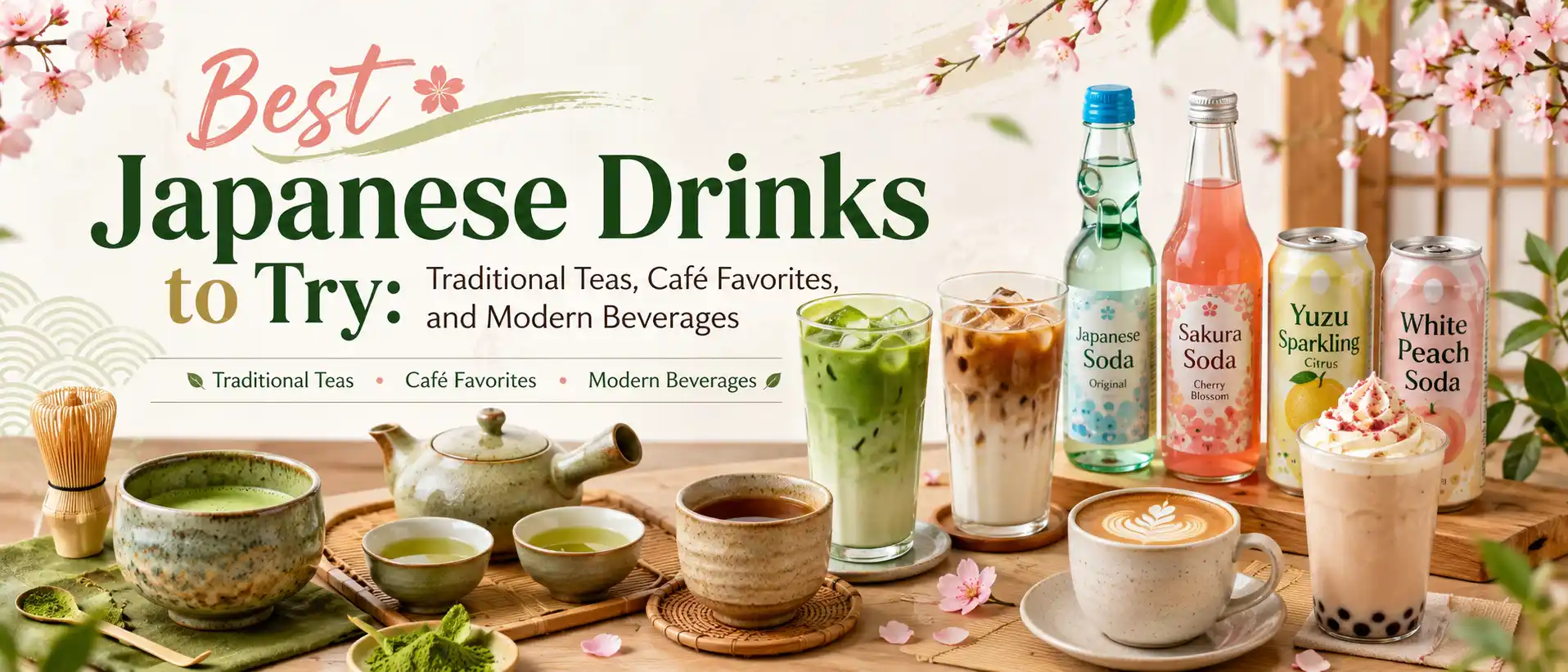
Best Japanese Drinks to Try in 2026: Traditional Favorites, Café Drinks & Easy Recipes
Choosing the best Japanese drinks can feel confusing because Japan’s beverage culture is much wider than matcha. A first-time shopper may see bottled green tea, barley tea, yuzu soda, ramune, Calpis, canned coffee, coffee jelly drinks, and seasonal café lattes all at once.
This guide explains the most popular Japanese drinks, how they taste, when to serve them, how much caffeine they usually contain, and which options are best for beginners. It also covers traditional favorites, modern convenience-store beverages, café-style drinks, and simple homemade recipes.
In practice, the easiest way to explore Japanese drinks is to try one tea, one fruit drink, one soda, and one café drink. That gives you a clear taste of Japan’s balance between tradition, seasonality, texture, and modern drink culture.
Quick Answer / TL;DR
Japanese drinks include traditional teas, roasted barley tea, matcha, hojicha, amazake, ramune soda, Calpis, yuzu drinks, canned coffee, and modern café lattes. The best Japanese drinks for beginners are hojicha latte, mugicha, ramune, yuzu soda, strawberry matcha latte, and canned milk coffee because they are easy to enjoy, widely available, and flavorful.
Best Japanese Drinks at a Glance
Use this table as a quick starting point before exploring each drink in detail.
| Japanese Drink | Main Flavor | Caffeine Level | Best Served | Best For |
|---|---|---|---|---|
| Matcha | Earthy, grassy, umami-rich | Moderate | Hot or iced | Tea lovers, café drinks |
| Sencha | Fresh, grassy, clean | Moderate | Hot or cold | Everyday tea |
| Hojicha | Roasted, nutty, mellow | Low | Hot or iced | Coffee alternatives |
| Mugicha | Toasted barley, clean | None | Cold | Summer hydration |
| Genmaicha | Green tea, roasted rice | Low to moderate | Hot | Food pairing |
| Amazake | Sweet rice, creamy | Low to none | Warm or chilled | Winter comfort |
| Ramune | Sweet, fizzy, lemon-lime | Usually none | Chilled | Festivals, kids, soda fans |
| Calpis / Calpico | Tangy, creamy, yogurt-like | None | Cold | Light soft drinks |
| Yuzu Soda | Bright citrus, floral | None | Cold | Refreshing fruit drinks |
| Japanese Canned Coffee | Smooth, bold, sweet or black | High | Hot or cold | Convenience-store coffee |
| Coffee Jelly Drink | Coffee, milk, jelly texture | Moderate to high | Iced | Dessert-style drinks |
| Pocari Sweat | Mild citrus, electrolyte drink | None | Cold | Hot weather, exercise |
Why Japanese Drinks Are Unique
Japanese beverage culture is built around balance, seasonality, aroma, and texture. Many drinks are not designed to be extremely sweet. Instead, they focus on clean flavors, gentle bitterness, roasted notes, fruit fragrance, and smooth mouthfeel.
What makes Japanese drinks taste different?
Many Japanese drinks feel lighter than typical Western soft drinks because they often use subtle sweetness and layered flavor. A yuzu drink may taste citrusy and floral rather than sugary. A hojicha latte may taste roasted and creamy without feeling heavy.
Common flavor themes include:
- Roasted notes from hojicha, genmaicha, and mugicha
- Umami depth from matcha and high-quality green tea
- Bright citrus from yuzu, mikan, and sudachi drinks
- Mild fermentation from amazake and Calpis-style drinks
- Texture contrast from coffee jelly, cream soda, and layered lattes
How does seasonality shape Japanese beverages?
Seasonality is a major reason Japanese drinks feel exciting. Spring brings sakura flavors. Summer highlights mugicha, ramune, citrus sodas, and chilled teas. Autumn often leans into roasted teas, chestnut, sweet potato, and caramel notes. Winter favors hot hojicha, amazake, ginger yuzu, and richer café drinks.
This seasonal rotation helps cafés, vending machines, and convenience stores keep menus fresh all year.
Where are Japanese drinks commonly sold?
You can find popular Japanese drinks in several places:
- Japanese grocery stores
- Asian supermarkets
- Convenience stores in Japan
- Vending machines in Japan
- Specialty tea shops
- Online Japanese snack shops
- Modern matcha and hojicha cafés
- Some international supermarkets
For bloggers, this creates strong content opportunities around taste tests, beginner rankings, café recipes, shopping guides, and seasonal drink roundups.
Traditional Japanese Drinks
Traditional Japanese drinks are deeply tied to tea, rice, fermentation, and seasonal meals. These drinks are often simple, but they carry strong cultural meaning.
What is matcha?
Matcha is powdered green tea made from tencha tea leaves. Unlike steeped tea, matcha is whisked into water, so the drinker consumes the powdered leaf.
Matcha has a bold flavor that can taste:
- Earthy
- Grassy
- Creamy
- Slightly bitter
- Umami-rich
- Lightly sweet when high quality
Traditional matcha is often served plain with hot water. Modern cafés use matcha in lattes, smoothies, cold foam drinks, strawberry matcha, and matcha lemonade.
Best for: morning energy, tea lovers, latte fans, and café-style recipes.
Beginner tip: Start with an iced matcha latte before trying ceremonial-style matcha plain.
What is sencha?
Sencha is Japan’s everyday green tea. It is steeped as loose leaves, not whisked as powder. Compared with matcha, sencha tastes lighter, cleaner, and more refreshing.
Sencha usually has:
- Fresh grassy flavor
- Mild bitterness
- Light sweetness
- Clean finish
- Moderate caffeine
Sencha pairs well with sushi, rice bowls, seafood, pickles, and simple snacks. It is one of the best Japanese drinks for readers who want a daily tea that does not feel too rich.
What is hojicha?
Hojicha is roasted Japanese green tea. The roasting process changes the flavor from grassy to warm, nutty, smoky, and caramel-like.
Many coffee drinkers enjoy hojicha because it has a roasted aroma without the sharp acidity of coffee. It also tends to be lower in caffeine than matcha or regular green tea.
Popular hojicha drinks include:
- Hot hojicha tea
- Iced hojicha
- Hojicha latte
- Brown sugar hojicha latte
- Vanilla hojicha cream drink
- Hojicha milk tea
Best for: evening sipping, low-caffeine tea, roasted flavors, and café drinks.
What is mugicha?
Mugicha is roasted barley tea. It is one of the most practical Japanese drinks because it is naturally caffeine-free and often served cold during hot weather.
Mugicha tastes:
- Toasted
- Mild
- Dry
- Clean
- Refreshing
Japanese households often keep chilled mugicha in the refrigerator during summer. It pairs well with grilled food, noodles, rice dishes, lunch boxes, and picnic meals.
Best for: caffeine-free drinking, summer hydration, family meals, and budget-friendly tea pitchers.
What is genmaicha?
Genmaicha blends green tea with roasted rice. Some rice grains puff during roasting, which is why many people call it “popcorn tea.”
Genmaicha tastes warm, nutty, and savory. It is less intense than matcha and more comforting than plain sencha.
Best for: tea beginners, savory food pairings, afternoon sipping, and cooler weather.
What is amazake?
Amazake is a sweet fermented rice drink. Many versions are non-alcoholic or contain very little alcohol, but some types are made from sake lees and may contain alcohol.
Amazake has a soft, creamy texture and a gentle rice sweetness. It can be served warm in winter or chilled in warmer months.
Common variations include:
- Ginger amazake
- Matcha amazake
- Cinnamon amazake
- Vanilla amazake
- Soy milk amazake
Safety note: Always check the label before serving amazake to children, pregnant people, or anyone avoiding alcohol.
Modern Japanese Café Drinks
Modern cafés have helped make Japanese drinks more popular worldwide. These beverages combine traditional ingredients with milk, coffee, fruit, cream, jelly, and layered presentation.
Why are matcha lattes so popular?
Matcha lattes are popular because milk softens matcha’s bitterness. The result is creamy, green, slightly earthy, and easy to customize.
Popular matcha latte styles include:
- Iced matcha latte
- Strawberry matcha latte
- Vanilla matcha latte
- Coconut matcha latte
- Matcha oat milk latte
- Sparkling matcha tonic
Based on real-world drink testing, strawberry matcha is one of the easiest matcha drinks for beginners because the fruit adds sweetness without hiding the tea completely.
What does a hojicha latte taste like?
A hojicha latte tastes roasted, nutty, warm, and smooth. It is less grassy than matcha and less acidic than coffee.
A good hojicha latte works well with:
- Oat milk
- Whole milk
- Brown sugar syrup
- Vanilla syrup
- Honey
- Cold foam
This drink is a strong choice for readers who want Japanese drinks that feel modern but not overly sweet.
What are coffee jelly drinks?
Coffee jelly drinks combine iced coffee, milk, cream, or syrup with cubes of coffee-flavored jelly. The drink feels part coffee and part dessert.
A typical coffee jelly drink includes:
- Chilled coffee
- Milk or cream
- Coffee jelly cubes
- Light syrup
- Ice
The jelly adds texture, which makes the drink more memorable than a standard iced coffee.
What is Japanese royal milk tea?
Royal milk tea is a creamy black tea drink often associated with Japanese cafés and bottled tea brands. It is usually richer than regular milk tea because the tea is simmered or steeped strongly with milk.
It tastes:
- Smooth
- Milky
- Mildly sweet
- Tea-forward
- Comforting
It is a good bridge drink for people who enjoy chai, English breakfast tea with milk, or bottled milk tea.
What is black sesame latte?
A black sesame latte uses roasted black sesame paste or powder with milk. It tastes nutty, earthy, and slightly sweet.
This is one of the best modern Japanese drinks for people who like dessert flavors but want something less common than vanilla or chocolate.
Popular Japanese Soft Drinks and Convenience-Store Beverages
Japan’s soft drink culture is playful, practical, and highly seasonal. Convenience stores and vending machines often carry bottled teas, canned coffees, fruit sodas, dairy-style drinks, and limited-edition flavors.
What is ramune soda?
Ramune is a Japanese carbonated soft drink known for its glass bottle and marble stopper. The bottle design is part of the experience, especially for children, festival visitors, and collectors.
Classic ramune tastes similar to lemon-lime soda. Popular flavors include:
- Original
- Melon
- Strawberry
- Lychee
- Blueberry
- Grape
- Yuzu
- Peach
Is ramune alcoholic? No. Traditional ramune is a non-alcoholic soda.
What is Calpis or Calpico?
Calpis, sold as Calpico in some international markets, is a tangy, yogurt-like soft drink. It tastes lightly creamy, sweet, and refreshing.
You may find it as:
- Still Calpis
- Calpis soda
- Calpis concentrate
- Fruit-flavored Calpis
- Calpis mixed with milk
- Calpis used in mocktails
Calpis is one of the best Japanese drinks for people who like yogurt drinks, kefir-style flavors, or creamy fruit beverages.
What is Pocari Sweat?
Pocari Sweat is a Japanese electrolyte drink with a mild citrus flavor. It is not carbonated and is often served chilled.
It is commonly used after sweating, exercise, hot baths, or summer travel. The taste is lighter than many sports drinks, which makes it easy to drink when very cold.
Why is Japanese canned coffee so popular?
Japanese canned coffee is popular because it is convenient, portable, and available in many styles. In Japan, canned coffee may be sold hot or cold depending on the season and machine.
Common types include:
- Black canned coffee
- Sweet milk coffee
- Café au lait
- Espresso-style coffee
- Low-sugar coffee
- Seasonal flavored coffee
Popular brands include Boss Coffee, Georgia, UCC, and Suntory options. Coffee lovers should start with black canned coffee for a cleaner taste or milk coffee for a sweeter beginner choice.
What are yuzu and mikan drinks?
Yuzu drinks use a fragrant Japanese citrus fruit with notes of lemon, grapefruit, and mandarin. Mikan drinks use Japanese mandarin oranges and taste softer, sweeter, and rounder.
Popular fruit drink styles include:
- Yuzu soda
- Yuzu honey tea
- Yuzu sparkling water
- Mikan juice
- Peach iced tea
- Japanese pear soda
- White grape soda
These fruit-based Japanese drinks are ideal for readers who want bright flavor without heavy cream or strong caffeine.
Best Japanese Drinks by Season
Season matters when choosing Japanese drinks. Some beverages taste best cold in humid weather, while others work better as warm comfort drinks.
What are the best Japanese summer drinks?
The best Japanese summer drinks are light, cold, and refreshing.
Top summer picks include:
- Iced mugicha
- Ramune soda
- Yuzu soda
- Calpis soda
- Cold sencha
- Peach iced tea
- Frozen matcha latte
- Pocari Sweat
- Melon cream soda
Hosting tip: Freeze sliced fruit instead of plain ice cubes. This keeps drinks cold without watering them down.
What are the best Japanese winter drinks?
Winter Japanese drinks often use warmth, roasted flavors, ginger, rice, and milk.
Top winter picks include:
- Hot hojicha latte
- Warm amazake
- Ginger yuzu tea
- Hot matcha latte
- Royal milk tea
- Black sesame latte
- Genmaicha
These drinks pair well with mochi, rice crackers, sweet buns, butter cookies, and toasted snacks.
What Japanese drinks work best in spring and autumn?
Spring drinks often highlight floral and fruity flavors, while autumn drinks lean roasted and cozy.
Spring picks:
- Sakura tea
- Sakura latte
- Strawberry matcha latte
- Yuzu sparkling tea
- Mikan soda
Autumn picks:
- Hojicha latte
- Genmaicha
- Chestnut milk tea
- Sweet potato latte
- Hot canned coffee
This seasonal structure helps bloggers create multiple supporting articles around the main Japanese drinks guide.
Japanese Drinks by Caffeine Level
Caffeine levels vary by recipe, serving size, brewing method, and brand. Anyone sensitive to caffeine should check product labels and use conservative portions.
| Drink | Typical Caffeine Level | Best Time to Drink |
|---|---|---|
| Mugicha | None | Any time |
| Ramune | Usually none | Afternoon or party |
| Calpis / Calpico | None | Any time |
| Yuzu Soda | None | Any time |
| Amazake | Low to none | Morning or evening |
| Hojicha | Low | Afternoon or evening |
| Genmaicha | Low to moderate | Morning or afternoon |
| Sencha | Moderate | Morning or afternoon |
| Matcha | Moderate | Morning |
| Japanese Canned Coffee | High | Morning or early afternoon |
| Coffee Jelly Drink | Moderate to high | Morning or afternoon |
Which Japanese drinks are best for caffeine-sensitive people?
The best low-caffeine or caffeine-free Japanese drinks include:
- Mugicha
- Ramune
- Calpis
- Yuzu soda
- Mikan juice
- Japanese pear soda
- Warm amazake
- Some hojicha drinks
People who are caffeine-sensitive should be careful with matcha, sencha, bottled green tea, canned coffee, and coffee jelly drinks.
Is matcha stronger than green tea?
Matcha often feels stronger than steeped green tea because the powdered tea leaf is consumed directly. Sencha is steeped and then the leaves are removed.
For many readers, this means matcha feels more intense in taste, color, and energy effect. A latte format can make matcha easier for beginners.
Best Japanese Drinks for Beginners
The best Japanese drinks for beginners are approachable, easy to find, and not too bitter.
What should a beginner try first?
Start with these six drinks:
- Hojicha latte for roasted, coffee-like flavor
- Mugicha for a clean caffeine-free tea
- Ramune for a fun soda experience
- Yuzu soda for bright citrus flavor
- Strawberry matcha latte for a gentle matcha entry
- Japanese canned milk coffee for a sweet coffee option
A simple tasting plan is to try one drink from each category: tea, soda, fruit drink, and café drink.
What Japanese drink should coffee lovers try?
Coffee lovers should start with:
- Hojicha latte
- Black canned coffee
- Coffee jelly drink
- Royal milk tea
- Black sesame latte
Hojicha is often the best first pick because it has roasted depth without the bitterness of strong coffee.
What Japanese drink should soda lovers try?
Soda lovers should start with:
- Ramune
- Calpis soda
- Yuzu soda
- Melon cream soda
- Mikan soda
- Japanese grape soda
Ramune is the most iconic choice because the marble bottle creates a memorable drinking experience.
What Japanese drink should tea beginners try?
Tea beginners should start with:
- Mugicha
- Genmaicha
- Hojicha
- Cold brew sencha
- Iced matcha latte
Avoid starting with very strong plain matcha if you dislike bitter flavors.
Easy Japanese Drink Recipes at Home
You do not need professional café equipment to make simple Japanese drinks at home. A small whisk, a jar, a kettle, and good ingredients are enough for beginner recipes.
How do you make a simple iced matcha latte?
Ingredients:
- 1 teaspoon matcha powder
- 2 tablespoons warm water
- 1 cup milk or oat milk
- 1–2 teaspoons honey or syrup
- Ice
Steps:
- Sift matcha into a small bowl.
- Add warm water.
- Whisk until smooth and foamy.
- Fill a glass with ice and milk.
- Pour matcha over the milk.
- Sweeten lightly and stir.
Pro tip: Oat milk creates a creamy texture and balances matcha bitterness well.
How do you make homemade mugicha?
Ingredients:
- 1–2 mugicha tea bags
- 4 cups cold water
- Ice
Steps:
- Add mugicha bags to a pitcher.
- Pour in cold water.
- Refrigerate for 2–4 hours.
- Remove tea bags.
- Serve over ice.
Storage tip: Drink homemade mugicha within two days for the freshest flavor.
How do you make sparkling yuzu soda?
Ingredients:
- 1 tablespoon yuzu juice or yuzu concentrate
- 1 cup sparkling water
- 1–2 teaspoons honey or simple syrup
- Ice
- Lemon or mint, optional
Steps:
- Add yuzu juice and sweetener to a glass.
- Stir until blended.
- Add ice.
- Pour sparkling water slowly.
- Stir gently and serve cold.
This is one of the easiest homemade Japanese drinks for summer.
How do you make a hot hojicha latte?
Ingredients:
- 1 teaspoon hojicha powder or strong brewed hojicha
- 1 cup milk
- 1 teaspoon brown sugar or honey
- Vanilla, optional
Steps:
- Warm the milk gently.
- Whisk hojicha with a little hot water.
- Combine milk and hojicha.
- Sweeten lightly.
- Serve warm.
Flavor tip: Brown sugar works especially well with hojicha’s roasted notes.
Common Mistakes When Trying Japanese Drinks
Many people judge Japanese drinks too quickly because they expect the same sweetness, strength, or texture as familiar Western beverages.
Should Japanese drinks taste very sweet?
No. Many Japanese drinks are intentionally subtle. Unsweetened teas, barley tea, lightly sweet fruit sodas, and roasted drinks often focus on aroma and balance.
If a drink tastes mild at first, try pairing it with food. Sencha, genmaicha, and mugicha often taste better with meals than alone.
Can boiling water ruin Japanese green tea?
Yes. Very hot water can make green tea taste harsh or bitter. Sencha and some delicate teas often taste smoother when brewed with slightly cooler water.
If green tea tastes too bitter, try:
- Shorter steeping time
- Cooler water
- Cold brewing
- Better-quality leaves
- Less tea per cup
Is all amazake alcohol-free?
No. Many amazake products are alcohol-free or very low in alcohol, but some versions made with sake lees may contain alcohol.
Always check the label before buying amazake for children, pregnancy, religious restrictions, or alcohol-free diets.
Is ramune difficult to open?
Ramune can feel tricky the first time because of the marble stopper. The plastic opener pushes the marble down into the neck of the bottle.
Open ramune slowly and keep the bottle upright to avoid overflow.
Are Japanese canned coffees all sweet?
No. Japanese canned coffee comes in black, low-sugar, milk coffee, café au lait, and sweetened styles. Check the label carefully if you want unsweetened coffee.
Where to Buy Japanese Drinks and How to Choose Better Options
Buying Japanese drinks is easier than ever, but labels, sugar levels, and caffeine content vary by brand.
Where can readers buy Japanese drinks?
Good places to buy Japanese drinks include:
- Japanese grocery stores
- Asian supermarkets
- Korean and Chinese supermarkets with Japanese sections
- Online Japanese snack stores
- Specialty tea shops
- International grocery aisles
- Matcha cafés
- Convenience stores in Japan
For the freshest tea, buy from shops that list harvest year, region, storage details, or tea type.
How do you choose better Japanese teas?
Look for:
- Clear tea type, such as sencha, hojicha, matcha, or genmaicha
- Origin details, such as Uji, Shizuoka, or Kagoshima
- Fresh packaging
- Resealable bags
- No stale aroma
- Proper storage away from heat and light
For matcha, choose culinary grade for lattes and ceremonial-style matcha for plain whisked tea.
How do you choose better Japanese soft drinks?
Check:
- Sugar content
- Caffeine content
- Serving size
- Carbonation level
- Fruit juice percentage
- Artificial colors or flavors
- Whether the drink is concentrate or ready-to-drink
If you want lighter options, start with unsweetened bottled tea, mugicha, sparkling yuzu water, or low-sugar canned coffee.
Frequently Asked Questions About Japanese Drinks
What are the most popular Japanese drinks?
The most popular Japanese drinks include matcha, sencha, hojicha, mugicha, genmaicha, ramune, Calpis, yuzu soda, amazake, Pocari Sweat, canned coffee, and coffee jelly drinks.
What is the best Japanese drink for beginners?
The best Japanese drink for beginners is usually hojicha latte because it tastes roasted, smooth, and less bitter than strong green tea. Ramune, yuzu soda, mugicha, and strawberry matcha latte are also easy first choices.
Are Japanese drinks healthy?
Some Japanese drinks can be healthy choices, especially unsweetened teas like sencha, hojicha, genmaicha, and mugicha. Sweet sodas, canned milk coffees, and dessert drinks can contain added sugar, so readers should check labels.
Which Japanese drinks have no caffeine?
Caffeine-free Japanese drinks often include mugicha, ramune, Calpis, yuzu soda, mikan juice, Japanese pear drinks, and many fruit sodas. Always check bottled tea and coffee labels because some contain caffeine.
What does hojicha taste like?
Hojicha tastes roasted, nutty, mellow, and slightly smoky. Many people compare its aroma to toasted grains, caramel, or light coffee. It is less grassy than sencha and softer than matcha.
What does yuzu soda taste like?
Yuzu soda tastes bright, citrusy, floral, and slightly tart. The flavor is often compared to a mix of lemon, grapefruit, and mandarin orange.
Is ramune soda alcoholic?
No. Traditional ramune is a non-alcoholic carbonated soft drink. It is known for its marble-sealed glass bottle and is popular during summer festivals.
What Japanese drink goes best with sushi?
Sencha, genmaicha, and cold mugicha pair well with sushi because they cleanse the palate without overpowering delicate fish, rice, and seaweed flavors.
What Japanese drink is closest to coffee?
Hojicha latte is the closest tea-based option for coffee drinkers because it tastes roasted and nutty. Japanese canned coffee and coffee jelly drinks are direct coffee-based choices.
Key Takeaways
- Japanese drinks include traditional teas, soft drinks, fruit beverages, café lattes, canned coffees, and fermented rice drinks.
- Matcha, sencha, hojicha, mugicha, genmaicha, and amazake are essential traditional options.
- Ramune, Calpis, Pocari Sweat, yuzu soda, and canned coffee represent modern everyday beverage culture.
- Mugicha, ramune, Calpis, and yuzu soda are good caffeine-free choices.
- Hojicha latte, strawberry matcha latte, ramune, and yuzu soda are the best beginner-friendly picks.
- The best way to explore Japanese drinks is to taste across categories instead of trying only matcha.
Conclusion
Japanese drinks offer much more variety than most people expect. The category includes earthy matcha, fresh sencha, roasted hojicha, caffeine-free mugicha, sweet amazake, fizzy ramune, tangy Calpis, fragrant yuzu soda, smooth canned coffee, and creative café drinks.
The biggest strength of Japanese drinks is balance. Many options focus on aroma, texture, seasonality, and clean flavor instead of overwhelming sweetness.
For beginners, start with hojicha latte, mugicha, ramune, yuzu soda, strawberry matcha latte, and Japanese canned coffee. That simple tasting path gives readers a clear introduction to traditional, modern, sweet, roasted, caffeinated, and caffeine-free choices.
The next step is simple: choose one tea, one soda, one fruit drink, and one café-style drink. That small tasting set is the easiest way to discover your personal favorite among the best Japanese drinks.