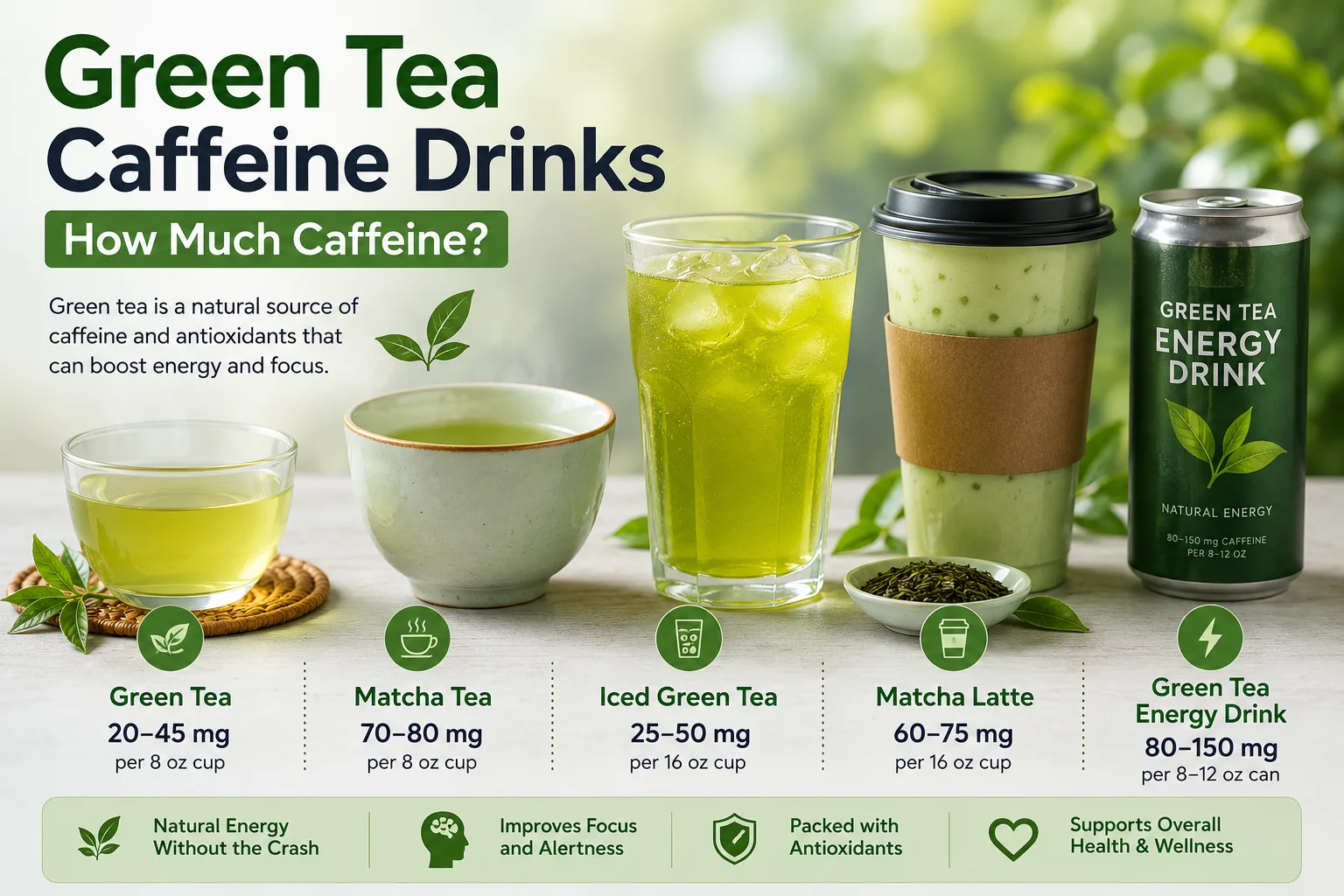
Compare caffeine levels in brewed green tea, matcha, sencha, gyokuro, hojicha, bottled teas and energy drinks—and learn how to choose the right drink for your caffeine needs.
Green tea caffeine drinks usually contain less caffeine than coffee, but the range is wide. A typical 8-ounce brewed green tea often contains around 20–50 mg, while a 2 g serving of matcha commonly lands around 50–80 mg.
- Brewed green tea: usually about 20–50 mg per 8 ounces
- Matcha: often about 50–80 mg per serving
- Gyokuro: can be much stronger than everyday green tea
- Hojicha and genmaicha: often provide gentler caffeine levels
- Bottled tea: always check the package for exact caffeine
- Energy drinks: may contain far more caffeine than brewed tea
How Much Caffeine Is in Green Tea Drinks?
Green tea naturally contains caffeine because it comes from Camellia sinensis. The same plant also produces black, white and oolong tea, so green tea isn’t naturally caffeine-free.
For an everyday 8-ounce cup, 20–50 mg of caffeine is a useful practical range. It isn’t a fixed limit because leaf type, amount of tea, water, steeping time and serving size can all change the final drink.
- Bottled green tea: varies widely by brand and bottle size
- Green tea energy drinks: may contain substantially more caffeine
- Iced green tea: generally contains the caffeine from the tea used before dilution
- Large café servings: can contain more caffeine simply because the serving is bigger
Green Tea Types Ranked by Caffeine
Green tea isn’t one beverage. Sencha, gyokuro, hojicha, bancha and genmaicha can produce very different cups. Matcha is even more distinct because the powdered leaf remains in the drink.
Published figures use different serving sizes and brewing methods, so the numbers below should be treated as useful comparisons rather than laboratory measurements for every cup.
| Green Tea Type | Approx. Caffeine | Typical Profile |
|---|---|---|
| Genmaicha | 10–25 mg / 200 ml | Mild, toasted |
| Hojicha | 15–25 mg / 200 ml | Roasted, nutty |
| Bancha | 20–30 mg / 200 ml | Simple, mellow |
| Sencha | 30–50 mg / 200 ml | Fresh, grassy |
| Jasmine Green Tea | 30–40 mg / 200 ml | Floral, fragrant |
| Long Jing | 25–40 mg / 200 ml | Fresh, nutty |
| Gyokuro | Potentially much higher | Rich, concentrated |
| Matcha | 50–80 mg / typical serving | Concentrated, vegetal |
Japanese food-composition data gives another useful perspective: brewed sencha and hojicha are listed around 20 mg per 100 ml, genmaicha around 10 mg, and gyokuro around 160 mg under its specified preparation.
Matcha vs. Brewed Green Tea Caffeine
Matcha changes the caffeine equation because you drink the powdered tea leaf instead of discarding the leaves. The amount of matcha powder therefore has a direct effect on the caffeine in your cup.
| Matcha Amount | Estimated Caffeine |
|---|---|
| 1 g | 25–40 mg |
| 2 g | 50–80 mg |
| 3 g | 75–120 mg |
| 4 g | 100–160 mg |
- Matcha latte: depends mainly on how much matcha powder the café uses
- More milk: changes texture and calories, not the caffeine supplied by matcha
- Less matcha powder: lowers caffeine in the finished drink
- Stronger matcha: often means more powder rather than automatically better tea
Green Tea vs. Coffee and Black Tea
For most everyday servings, brewed green tea contains less caffeine than brewed coffee. Black tea commonly falls between ordinary green tea and coffee, although preparation can blur those boundaries.
| Drink | Typical Caffeine | Serving Reference |
|---|---|---|
| Green tea | 20–50 mg | 8 oz |
| Matcha | 50–80 mg | Typical serving |
| Black tea | 40–60 mg | 8 oz |
| Brewed coffee | 80–100+ mg | 8 oz |
| Gyokuro | Can be highly concentrated | Varies by preparation |
| Decaf green tea | Usually a few mg | Serving varies |
Don’t compare caffeine by cup size alone. An 8-ounce drink and a 20-ounce drink aren’t equivalent servings, even when they contain the same beverage.
What Changes the Caffeine in Green Tea?
The caffeine in your cup depends on more than the name printed on the tea package. Leaf quantity, tea variety, water temperature, steep time and serving size all influence the final amount.
More Caffeine
- More tea leaves
- Longer steeping
- Hotter water
- Larger serving
- Some shaded tea varieties
Less Caffeine
- Fewer tea leaves
- Shorter steeping
- Smaller serving
- Lower-caffeine varieties
- Decaffeinated tea
A useful rule is simple: stronger tea usually means more caffeine, but flavor strength and caffeine aren’t perfectly interchangeable. A tea can taste bitter without having an extreme caffeine level.
How to Make Lower-Caffeine Green Tea Drinks
You don’t need to give up green tea to reduce caffeine. Start by choosing a tea style that naturally tends toward a lower amount, then control the preparation.
- Choose genmaicha for a mild, toasted flavor
- Try bancha for a simple everyday tea
- Use hojicha for a roasted, nutty profile
- Choose decaf green tea when you want minimal caffeine
- Use fewer leaves for homemade tea
- Keep the steep shorter for a lighter cup
- Make a smaller serving when practical
- Add lemon, mint or fruit instead of making tea stronger
If caffeine affects your sleep, don’t rely only on a tea’s name. Check the product label when available, especially for bottled drinks and café beverages.
Decaf Green Tea Drinks: What to Expect
Decaf green tea still contains some caffeine. Decaffeination removes most caffeine but does not guarantee an absolute zero. Current tea references commonly put decaf green tea around 2–5 mg per serving.
Decaf Green Tea Lemonade
Combine chilled decaf green tea with fresh lemon and ice for a bright, refreshing drink.
Decaf Mint Green Tea
Pair chilled decaf green tea with fresh mint for a cooling, simple drink.
Decaf Jasmine Green Tea
Use decaf jasmine tea for a floral drink that keeps the caffeine lower.
Herbal Infusion
Choose an appropriate caffeine-free herbal infusion when you want to avoid true tea.
Don’t confuse decaf with caffeine-free. Those terms describe different things.
Iced Green Tea Caffeine Drinks
Iced green tea is one of the easiest ways to turn brewed tea into a cold drink. The caffeine depends on how much brewed tea goes into the glass, not simply on whether the drink is served hot or cold.
Iced Sencha
Crisp and grassy. Brew, chill and serve over ice with a lemon wedge.
Peach Green Tea
Add peach flavor to chilled green tea for a soft, fruity profile.
Green Tea Lemonade
Combine chilled green tea with lemon for a tart and refreshing drink.
Strawberry Green Tea
Pair chilled green tea with strawberries for a colorful fruit-forward drink.
Mint Green Tea
Add fresh mint to chilled green tea for a cool herbal finish.
Cucumber Green Tea
Use cucumber and chilled tea for a clean, subtle flavor combination.
Sparkling Green Tea
Top chilled green tea with sparkling water for a lighter, fizzy drink.
Cold-Brew Green Tea
Cold-brew tea for a smooth, refreshing option that can taste less bitter.
Brew green tea, cool it, then pour it over ice. Add lemon, orange peel, mint, berries or a small amount of sweetener if desired.
Bottled Green Tea Caffeine: Read the Label
Bottled green tea can vary dramatically. One product may contain little caffeine, while another can contain several times as much because of tea concentration, bottle size, added caffeine or other ingredients.
- Check caffeine in milligrams when listed
- Check whether the figure applies to one serving or the whole bottle
- Look at the bottle size
- Check for green tea extract
- Look for added caffeine
- Check for guarana in energy-style products
- Compare sugar separately from caffeine
- Recheck labels when products or formulas change
Green Tea Energy Drinks Are Different
A green tea energy drink shouldn’t automatically be treated like a brewed cup of tea. It may contain green tea extract plus added caffeine or other stimulant ingredients.
- Read the total caffeine per serving
- Check the number of servings per can
- Look for added caffeine
- Check for guarana or other caffeine sources
- Don’t estimate caffeine from the words “green tea”
- Adjust comparisons for serving size
- Check the label before combining it with coffee
- Highly caffeinated energy products are not appropriate for children or adolescents
The FDA notes that up to 400 mg of caffeine per day is generally not associated with dangerous negative effects for most healthy adults, although individual sensitivity varies.
Best Green Tea Drinks for Different Caffeine Needs
| Your Goal | Good Starting Choice | Why |
|---|---|---|
| Lighter cup | Genmaicha or mild bancha | Often gentler caffeine levels |
| Moderate everyday caffeine | Sencha | Classic green tea option |
| Roasted flavor | Hojicha | Toasty and mellow |
| Stronger tea | Gyokuro | Can be highly concentrated |
| Concentrated drink | Matcha | Whole powdered leaf is consumed |
| Minimal caffeine | Decaf green tea | Most caffeine is removed |
| Fruity cold drink | Iced green tea | Easy to customize |
| Café-style drink | Matcha latte | Ask how much powder is used |
A useful strategy is to change the tea before changing the sweetener. If a drink tastes too weak, adding more tea may also raise its caffeine.
Green Tea Drinks With Matcha
Matcha gives you a different range of drink options because its vivid flavor works with milk, fruit, citrus and sparkling ingredients. The caffeine level depends heavily on the amount of powder used.
Classic Matcha
Whisk matcha with water for a concentrated tea with a rich vegetal profile.
Iced Matcha Latte
Combine matcha with cold milk and ice for a creamy café-style drink.
Strawberry Matcha
Layer strawberry purée with milk and matcha for a fruity drink.
Mango Matcha
Pair matcha with ripe mango flavor for a tropical combination.
Vanilla Matcha
Add a small amount of vanilla to soften matcha’s vegetal character.
Coconut Matcha
Use unsweetened coconut milk for a creamy, lightly tropical variation.
Matcha Lemonade
Combine chilled matcha with citrus for a bright and refreshing drink.
Sparkling Matcha
Mix chilled matcha with sparkling water for a fizzy variation.
Use less matcha powder. Adding more milk changes the drink’s texture but doesn’t remove the caffeine already supplied by the powder.
Flavorful Green Tea Drinks Without Heavy Sugar
Green tea doesn’t need lots of sugar to become interesting. Citrus, herbs, fruit, spices and carbonation can transform the drink while keeping the recipe simple.
Lemon + Mint
Bright, clean and easy.
Orange + Ginger
Citrusy with gentle warmth.
Peach + Green Tea
Soft and naturally fruity.
Cucumber + Lime
Crisp and subtle.
Strawberry + Basil
Fruit-forward with herbal depth.
Pineapple + Lime
Tropical and tart.
Blueberry + Lemon
Fruity with a sharp finish.
Sparkling Green Tea
Simple, fizzy and low effort.
For the best flavor, brew the tea well first. Adding sweetener to an over-steeped, bitter tea often hides the problem rather than fixing it.
How to Brew Green Tea for Better Caffeine Control
Brewing gives you direct control over a homemade cup. Tea quantity, water temperature and steeping time all influence extraction.
- Use the tea’s recommended water temperature
- Measure loose leaf when you want repeatable results
- Use less leaf for a lighter cup
- Keep steeping shorter for a milder drink
- Use hotter water when the tea specifically calls for it
- Avoid repeatedly over-steeping the same leaves
- Cool brewed tea before making iced drinks
- Track serving size when caffeine matters to you
Don’t assume bitter equals extremely caffeinated. Taste depends on tannins, temperature, tea variety and extraction, not caffeine alone.
Green Tea Drinks for Morning, Afternoon and Evening
| Time | Drink Ideas |
|---|---|
| Morning | Matcha, sencha or stronger iced green tea |
| Late morning | Sencha with lemon |
| Lunch | Iced jasmine green tea |
| Early afternoon | Genmaicha or moderate green tea |
| Late afternoon | Lighter green tea or hojicha |
| Evening | Decaf green tea |
| After dinner | Caffeine-free herbal tea |
| Hot weather | Chilled green tea with citrus |
Your own caffeine sensitivity matters more than a generic schedule. If caffeine disrupts your sleep, move caffeinated drinks earlier or choose a lower-caffeine option.
Caffeine Safety and Green Tea Drinks
For most healthy adults, the FDA says up to 400 mg of caffeine per day is generally not associated with dangerous negative effects. Individual sensitivity can be much lower, and caffeine can affect sleep or cause unwanted symptoms in sensitive people.
Pregnancy, certain health conditions, medication use and individual caffeine sensitivity can change what is appropriate. If caffeine causes symptoms or you have a medical concern, discuss your intake with a healthcare professional.
- Count caffeine from tea, coffee, soda, chocolate and energy products
- Check labels on packaged drinks
- Remember that decaf still contains small amounts
- Don’t assume herbal tea contains caffeine-free ingredients without checking
- Be cautious with concentrated caffeine products
- Don’t treat green tea as a medical treatment
- Children and adolescents should not be encouraged to consume caffeinated energy products
- Ask a healthcare professional about caffeine during pregnancy or with medication concerns
Frequently Asked Questions About Green Tea Caffeine
Does Green Tea Have Caffeine?
Yes. Green tea naturally contains caffeine because it comes from Camellia sinensis. Ordinary brewed green tea commonly falls around 20–50 mg per 8-ounce serving, although preparation can move the number higher or lower.
Does Matcha Have More Caffeine Than Green Tea?
Usually, yes. Matcha is made from powdered tea leaves that remain in the drink, so you consume the whole leaf rather than only the extracted infusion. A typical 2 g serving is often estimated around 50–80 mg.
Which Green Tea Has the Least Caffeine?
There isn’t one universal winner because preparation matters. Genmaicha, bancha, hojicha and decaffeinated green tea can all be lower-caffeine choices. For the lowest caffeine, choose a labeled decaf product or a suitable caffeine-free herbal infusion.
Does Steeping Green Tea Longer Increase Caffeine?
Generally, yes. Longer steeping allows more compounds, including caffeine, to move from the leaves into the water. Water temperature, leaf quantity and tea variety also matter.
Is Decaf Green Tea Completely Caffeine-Free?
No. Decaffeination removes most caffeine, but small residual amounts can remain. Current references commonly place decaf green tea around 2–5 mg per serving.
Does Green Tea Have More Caffeine Than Coffee?
Usually not. An 8-ounce brewed green tea commonly contains around 20–50 mg, while brewed coffee often contains roughly 80–100 mg or more. Matcha and concentrated green tea preparations can narrow the difference.
Can You Reduce the Caffeine in a Green Tea Drink?
Yes. Use less tea, choose a lower-caffeine variety, shorten the brew or choose decaf green tea. For matcha, using less powder is the most direct approach.
Conclusion: Choosing the Right Green Tea Caffeine Drink
Green tea caffeine drinks cover a much wider range than one simple number suggests. Ordinary sencha can be moderate, matcha can be considerably stronger, and bottled or energy-style products can vary even more.
The easiest approach is to choose the tea type, serving size and preparation that fit your needs. Check packaged-drink labels, measure matcha when possible, and choose a lower-caffeine tea when you want a gentler cup.