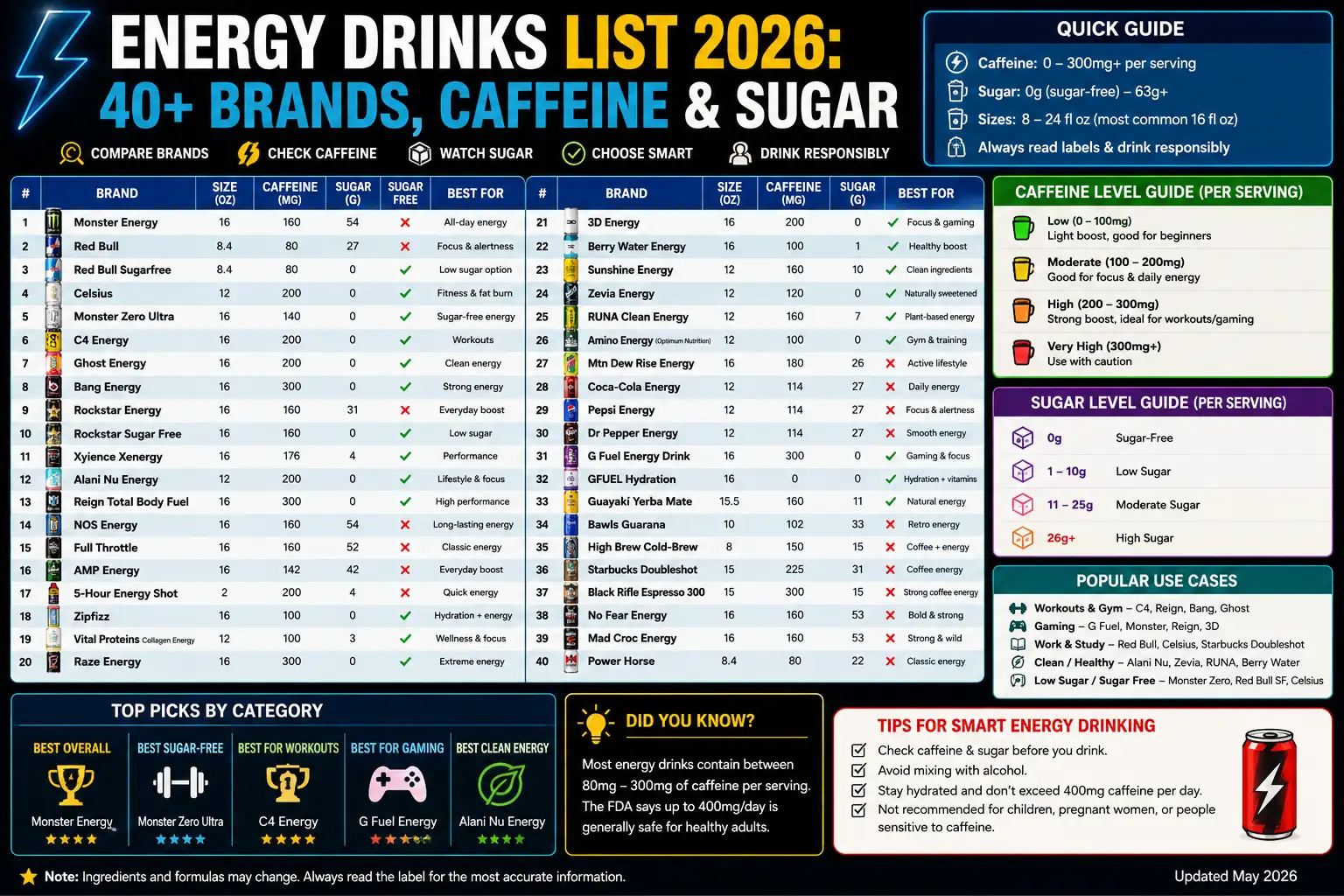
Energy Drinks List 2026: 40+ Popular Brands Ranked by Caffeine, Sugar & Strength
Compare a comprehensive energy drinks list covering Red Bull, Monster, Celsius, Alani Nu, C4, GHOST, REIGN, Bang, PRIME, Rockstar, ZOA, Bloom, Zevia, GORGIE, Guayakí, Gorilla Mind, coffee-energy drinks, powders, and lower-caffeine alternatives.
Choosing an energy drink is harder than it looks. A small can can contain 80 mg of caffeine, while stronger products can reach 300 mg in one serving. Sugar, serving size, carbonation, flavor, and added ingredients vary just as widely.
This energy drinks list compares popular U.S. products by caffeine level, sugar style, format, and practical use. It includes Red Bull, Monster, Celsius, Alani Nu, C4, GHOST, REIGN, Bang, PRIME, Rockstar, ZOA, Bloom, Zevia, GORGIE, Guayakí, Gorilla Mind, and several alternatives.
Last verified: August 12, 2026.
The best energy drink depends first on how much caffeine you actually want.
Lower-dose choices include Sparkling Ice + Caffeine at about 53–70 mg, Red Bull 8.4 oz at 80 mg, and Bloom Energy Mini at 100 mg. Many mainstream products sit between 140 and 200 mg, while Celsius Essentials contains 270 mg and products such as REIGN and C4 Ultimate reach 300 mg.
- Choose caffeine level before flavor or brand.
- Zero sugar does not mean low caffeine.
- 140–160 mg is moderate only within this editorial comparison.
- 200 mg is common in fitness-focused energy drinks.
- 270–300 mg is a very high single-serving amount.
- Children and teens should avoid energy drinks.
How This Energy Drink Guide Was Built
This is a specification-based comparison, not a blind taste test. It does not claim that every drink was personally tasted.
Caffeine amounts, serving sizes, sugar information, and formats in this article are based on the current U.S. product information referenced when the guide was prepared. Health guidance is kept separate from manufacturer marketing claims.
Complete Energy Drinks List for 2026
The fastest way to compare products is side by side. This list includes sparkling cans, tea-based drinks, coffee-energy hybrids, still beverages, powder sticks, and a caffeine-free alternative.
| Energy Drink | Typical Serving | Caffeine | Sugar Style | Format | Best Fit |
|---|---|---|---|---|---|
| Sparkling Ice + Caffeine | 16 oz | 53–70 mg | 0 g | Sparkling | Lower-caffeine sparkling option |
| ASPIRE Energy | 12 oz | 80 mg | 0 g | Sparkling | Lower-dose natural caffeine |
| Red Bull Original | 8.4 oz | 80 mg | 27 g | Sparkling | Small classic serving |
| Red Bull Sugarfree | 8.4 oz | 80 mg | 0 g | Sparkling | Small zero-sugar serving |
| Bloom Energy Mini | 7.5 oz | 100 mg | 0 g | Sparkling | Compact middle-ground choice |
| Red Bull Original | 12 oz | 114 mg | 37 g | Sparkling | Larger classic Red Bull |
| Zevia Energy | 12 oz | 120 mg | 0 g | Sparkling | Stevia-sweetened option |
| Monster Ultra Paradise | 16 oz | 140 mg | 0 g | Sparkling | Moderate caffeine, zero sugar |
| Monster Ultra Red | 16 oz | 140 mg | 0 g | Sparkling | Berry-style zero-sugar choice |
| Monster Lo-Carb | 16 oz | 140 mg | Low-carb | Sparkling | Lower-calorie classic Monster style |
| Monster Ultra Peachy Keen | 16 oz | 150 mg | 0 g | Sparkling | Peach-flavored zero sugar |
| Monster Ultra Fiesta Mango | 16 oz | 150 mg | 0 g | Sparkling | Tropical zero-sugar option |
| GORGIE Energy | Can | 150 mg | 0 g | Sparkling | Green-tea caffeine and L-theanine |
| Guayakí Peach Revival | 15.5 oz | 150 mg | 3 g | Still yerba mate | Lower-sugar tea-style energy |
| Guayakí Enlighten Mint | 15.5 oz | 150 mg | Sweetened | Still yerba mate | Minty non-carbonated tea |
| Monster Original | 16 oz | 160 mg | Sweetened | Sparkling | Traditional full-flavor energy drink |
| Monster Zero Sugar | 16 oz | 160 mg | 0 g | Sparkling | Original-style flavor without sugar |
| Monster Rehab Tea + Lemonade | 15.5 oz | 160 mg | Low-calorie | Still tea | Non-carbonated tea-lemonade |
| Monster Rehab Peach Tea | 15.5 oz | 160 mg | Low-calorie | Still tea | Peach tea alternative |
| Monster Rehab Green Tea | 15.5 oz | 160 mg | Low-calorie | Still tea | Green-tea format |
| Rockstar Sugar Free | 16 oz | 160 mg | 0 g | Sparkling | Traditional Rockstar without sugar |
| Rockstar Pure Zero | 16 oz | 160 mg | 0 g | Sparkling | Fruit-forward sugar-free style |
| Rockstar Original | 16 oz | 160 mg | 63 g | Sparkling | High-sugar classic formula |
| NOS Original | 16 oz | 160 mg | Sweetened | Sparkling | Classic citrus-style energy drink |
| ZOA Energy | 12 oz | 160 mg | 0 g | Sparkling | Green tea and green coffee caffeine |
| Bloom Sparkling Energy | Can | 180 mg | 0 g | Sparkling | Green-coffee caffeine |
| Celsius | Can | 200 mg | Zero-sugar line | Sparkling | Popular 200 mg tier |
| Celsius Vibe | Can | 200 mg | Zero-sugar line | Sparkling | Flavored Celsius line |
| Alani Nu Energy | 12 oz | 200 mg | 0 g | Sparkling | Sweet fruit and candy-style flavors |
| C4 Performance Energy | 12 or 16 oz | 200 mg | 0 g | Sparkling | Workout-oriented formula |
| PRIME Energy | 16 oz | 200 mg | 0 g | Sparkling | Energy plus listed electrolytes |
| Gorilla Mind Energy | Can | 200 mg | 0 g | Sparkling | Multi-ingredient stimulant formula |
| GHOST Energy Sticks | Mix with 12–16 oz | 200 mg | 0 g | Powder | No-fizz portable option |
| Celsius On-The-Go | 1 packet | 200 mg | Varies | Powder | Portable Celsius format |
| Fast Twitch | 12 oz | 200 mg | 0 g | Still | Workout-focused bottled option |
| Java Monster Mean Bean | 15 oz | 200 mg | Sweetened | Coffee | Coffee-energy hybrid |
| Starbucks Tripleshot Energy | 15 oz | 225 mg | Sweetened | Coffee | Strong ready-to-drink coffee |
| Celsius Essentials | Can | 270 mg | Zero-sugar line | Sparkling | Very high caffeine tier |
| REIGN Total Body Fuel | 16 oz | 300 mg | 0 g | Sparkling | Very high caffeine workout drink |
| Bang Energy | 16 oz | 300 mg | 0 g | Sparkling | Very high caffeine zero-sugar option |
| C4 Ultimate | 16 oz | 300 mg | 0 g | Sparkling | Very high caffeine performance formula |
| UPDATE Energy | Can | 0 mg caffeine | 0 g | Sparkling | Caffeine-free paraxanthine alternative |
Check the current label on the exact can, bottle, or packet you buy. Product formulations, package sizes, caffeine amounts, and flavors can change.
Best Energy Drinks by Caffeine and Use Case
There is no universal “best” energy drink. A useful choice starts with dose, sugar, and format rather than packaging or flavor alone.
Lowest Caffeine
Sparkling Ice + Caffeine sits around 53–70 mg.
Best Small Can
Red Bull 8.4 oz provides about 80 mg caffeine.
Best 100 mg Option
Bloom Energy Mini provides 100 mg in a 7.5-ounce can.
Moderate Zero-Sugar Pick
Monster Ultra Paradise provides about 140 mg and zero sugar.
Best Tea-Style Option
Guayakí Peach Revival combines yerba mate with 150 mg caffeine.
Best 200 mg Workout Pick
C4 Performance Energy delivers 200 mg in a workout-focused formula.
Very High Caffeine
REIGN and C4 Ultimate each reach 300 mg.
Caffeine-Free Alternative
UPDATE Energy is positioned around paraxanthine instead of caffeine.
Best Stevia-Sweetened Choice
Zevia Energy contains about 120 mg caffeine, zero sugar, and zero calories while using stevia extract.
Best Non-Carbonated Mainstream Option
Monster Rehab Tea + Lemonade contains approximately 160 mg caffeine in a still tea-and-lemonade format.
Most Popular Energy Drink Brands in the USA
Brand familiarity still influences how consumers shop. In the source article’s cited 2026 category research, Red Bull and Monster remain the strongest mental leaders, with Celsius following behind.
Red Bull
Red Bull stands out because its caffeine dose changes clearly with can size. The article lists approximately:
- 8.4 oz: 80 mg
- 12 oz: 114 mg
- 16 oz: 151 mg
- 20 oz: 198 mg
Monster Energy
Monster has one of the broadest portfolios, including Original, Zero Sugar, Ultra, Rehab, Juice Monster, and Java Monster. Caffeine varies substantially between those lines.
Celsius
Standard Celsius and Celsius Vibe are listed at 200 mg, while Celsius Essentials reaches 270 mg. Celsius On-The-Go packets also provide 200 mg.
Alani Nu
Current Alani Nu energy drinks in this guide contain 200 mg caffeine and zero sugar in 12-ounce cans.
C4 Energy
C4 has distinct strength tiers: C4 Performance Energy at 200 mg and C4 Ultimate at 300 mg.
REIGN
REIGN Total Body Fuel sits firmly in the very-high-caffeine tier at 300 mg per 16-ounce serving.
PRIME Energy
The source article lists PRIME Energy at 200 mg caffeine, zero sugar, and 355 mg listed electrolytes per 16-ounce can, with the product labeled for adults 18+.
PRIME Energy and PRIME Hydration are different products. PRIME Hydration is the caffeine-free hydration line.
Energy Drinks by Caffeine Level
There is no universal medical definition for low, moderate, or high energy drinks. The following are editorial shopping bands, not medical categories.
| Caffeine per Serving | Comparison Band | Examples |
|---|---|---|
| 0–100 mg | Lower caffeine | Sparkling Ice + Caffeine, ASPIRE, Red Bull 8.4 oz, Bloom Mini |
| 101–160 mg | Moderate | Zevia, Monster Ultra, GORGIE, Guayakí, Rockstar, NOS, ZOA |
| 161–200 mg | High | Bloom, Celsius, Alani Nu, C4, PRIME, Gorilla Mind |
| 201–299 mg | Very high | Starbucks Tripleshot, Celsius Essentials |
| 300 mg+ | Very high | REIGN, C4 Ultimate, Bang |
Lower-Caffeine Energy Drinks
Adults who are sensitive to caffeine do not necessarily need to jump straight to a 200 mg product. Several choices in this guide contain 100 mg or less.
Sparkling Ice + Caffeine
Approximately 53–70 mg caffeine with zero sugar.
ASPIRE
Approximately 80 mg natural caffeine with zero sugar.
Red Bull 8.4 oz
The regular version provides 80 mg caffeine and 27 g sugar, while Red Bull Sugarfree provides the same listed caffeine level without sugar.
Bloom Energy Mini
The 7.5-ounce Mini contains 100 mg, compared with 180 mg in the regular Bloom sparkling product described in the article.
Zero-Sugar Energy Drinks
Zero-sugar products now occupy a large part of the energy-drink aisle, but sugar content and stimulant strength must be evaluated separately.
A 300 mg zero-sugar drink still contains 300 mg caffeine. Evaluate stimulant dose separately from calories and sugar.
Popular Zero-Sugar Examples
- Red Bull Sugarfree: 80 mg
- Zevia Energy: 120 mg
- Monster Ultra Paradise: 140 mg
- GORGIE: 150 mg
- Monster Zero Sugar: 160 mg
- ZOA: 160 mg
- Bloom Sparkling Energy: 180 mg
- Alani Nu: 200 mg
- C4 Performance: 200 mg
- PRIME Energy: 200 mg
- REIGN: 300 mg
- C4 Ultimate: 300 mg
Are Sugar-Free Energy Drinks Better?
They can be useful when reducing added sugar, but “better” depends on what you are trying to limit. If caffeine is your concern, focus first on milligrams per serving.
Energy Drinks With Sugar
Full-sugar energy drinks remain popular because sugar changes sweetness, mouthfeel, and flavor, but amounts can become substantial in larger packages.
Rockstar Original
The article lists 63 g total and added sugar in a current 16-ounce Rockstar Original.
The article cites American Heart Association guidance of about 36 g added sugar per day for most men and 25 g for most women. A 63 g drink exceeds both amounts.
Red Bull Original
- 8.4 oz: 27 g sugar
- 12 oz: 37 g sugar
- 16 oz: 51 g sugar
- 20 oz: 63 g sugar
Monster Original
The source article lists 230 calories and 160 mg caffeine per 16 ounces. Monster Zero Sugar is presented as an alternative with 160 mg caffeine, 10 calories, and 0 g sugar.
Juice and Coffee Energy Drinks
Products such as Juice Monster and Java Monster occupy a different nutritional category from zero-calorie cans.
Java Monster Mean Bean, for example, is described as containing real coffee and cream with 200 mg caffeine, 220 calories, and 8 g protein per 15-ounce serving.
Natural-Caffeine and Tea-Based Energy Drinks
“Natural caffeine” usually means the caffeine comes from ingredients such as green coffee, green tea, or yerba mate.
The article notes that caffeine’s dose matters more than whether the source is marketed as natural or synthetic.
Bloom
Regular Bloom Sparkling Energy is listed at 180 mg caffeine from green coffee bean extract, while the Mini contains 100 mg.
ZOA
ZOA is described as using caffeine from green tea and green coffee beans. The guide lists 160 mg for a 12-ounce can and up to 210 mg for some larger products.
GORGIE
GORGIE is listed with 150 mg green-tea caffeine, 0 g sugar, and L-theanine.
Guayakí Yerba Mate
Guayakí’s Higher Power cans use brewed yerba mate and several examples in this article contain 150 mg caffeine in a still tea format.
Zevia Energy
Zevia provides 120 mg caffeine and uses stevia instead of sugar.
Non-Carbonated, Coffee, and Alternative Energy Drinks
Energy products now extend far beyond fizzy fruit-flavored cans. The category includes tea, coffee, still workout drinks, powders, and caffeine alternatives.
Monster Rehab
Monster Rehab combines tea-style flavors with 160 mg caffeine and no carbonation.
Guayakí
Guayakí provides another still tea-based format with several products listed at 150 mg caffeine.
Fast Twitch
Fast Twitch is described as a 12-ounce non-carbonated workout drink containing 200 mg caffeine, zero sugar, and electrolytes.
Java Monster
Mean Bean and Café Latte are positioned closer to canned coffee, with the article listing 200 mg caffeine per 15 ounces.
Starbucks Tripleshot Energy
The article lists approximately 225 mg caffeine per 15-ounce can for products such as French Vanilla.
UPDATE Energy
UPDATE uses a different positioning: a zero-caffeine energy drink using paraxanthine rather than caffeine. It should therefore be treated as a category alternative rather than a conventional caffeine-based energy drink.
Energy Drinks for Workouts: What Actually Matters
Workout-focused products may include ingredients such as beta-alanine, amino acids, electrolytes, or betaine. Those additions do not automatically make a product ideal for hydration.
C4 Performance Energy
C4 Performance is listed with 200 mg caffeine plus ingredients such as CarnoSyn beta-alanine and BetaPower betaine.
REIGN
REIGN is listed with 300 mg caffeine along with BCAAs, CoQ10, and electrolytes. The caffeine amount remains the most important stimulant figure to notice.
PRIME Energy
PRIME Energy is listed with 355 mg electrolytes and 200 mg caffeine in the current 16-ounce formula discussed in this guide.
Energy Drink vs. Hydration Drink
Energy Shots and Powder Mixes
Powder sticks and energy shots make caffeine easier to carry, but small package size can make it easy to underestimate dose.
Celsius On-The-Go
Celsius On-The-Go packets are listed at 200 mg caffeine per packet.
GHOST Energy Sticks
GHOST Energy Sticks are listed with 200 mg natural caffeine and zero sugar, mixed with 12–16 ounces of liquid.
Energy Shots
Energy shots concentrate stimulant ingredients into very little liquid. Do not assume a small bottle means a small caffeine dose.
Prepare caffeinated powders according to instructions. Do not dry-scoop caffeinated powders and do not casually double servings.
How to Read an Energy Drink Label
Before buying, spend a few seconds checking the back of the container rather than relying only on front-label claims.
Caffeine
Check total caffeine per container or serving.
Serving Size
Confirm whether nutrition facts cover the entire can or only part of it.
Added Sugar
Large full-sugar cans can contain substantial added sugar.
Calories
Zero-sugar sparkling drinks and coffee-energy drinks can differ dramatically.
Sweeteners
Common options include sugar, sucralose, acesulfame potassium, and stevia.
Allergens & Age Warnings
Check dairy, specialty ingredients, and any adult-use warnings.
Caffeine
Look for total caffeine per container, not simply a branded ingredient blend.
Serving Size
Confirm whether the nutrition panel describes the entire container.
Added Sugar
Check grams of added sugar, especially on traditional sweetened energy drinks.
Calories
Coffee-energy beverages can contain far more calories than zero-sugar sparkling drinks. Java Monster Mean Bean is listed at 220 calories in this guide.
Sweeteners
- Regular sugar
- Sucralose
- Acesulfame potassium
- Stevia
- Combinations of non-sugar sweeteners
Allergens
Coffee-energy drinks may contain milk, while specialty products can include ingredients not normally found in standard soda-style energy drinks.
Age Warnings
Some products discussed in the article explicitly state that they are intended for adults age 18+. Treat those warnings seriously.
Common Energy Drink Ingredients Explained
Caffeine
Caffeine is the main stimulant in most conventional energy drinks. It can come directly from added caffeine or ingredients such as coffee, tea, guarana, or yerba mate.
Taurine
Taurine appears in many energy-drink formulas, but its presence alone does not tell you how stimulant-heavy the drink is.
B Vitamins
B vitamins support normal metabolism, but extra vitamins do not make a high-caffeine drink harmless.
Guarana
Guarana naturally contains caffeine. Check whether the stated total caffeine already includes all ingredient sources.
L-Theanine
L-theanine is an amino acid naturally associated with tea and appears in products such as GORGIE.
Beta-Alanine
Beta-alanine is common in workout-oriented formulas such as C4 and can cause temporary tingling.
Electrolytes
Sodium, potassium, and magnesium are common electrolytes, but their presence does not automatically turn an energy drink into a purpose-built rehydration beverage.
Energy Drinks vs. Coffee and Sports Drinks
Energy Drinks vs. Coffee
Both categories can provide caffeine. Packaged energy drinks often state a more predictable caffeine amount, while coffee varies by bean, brew method, serving size, and preparation.
An 8.4-ounce Red Bull is listed at 80 mg, while a 16-ounce REIGN is listed at 300 mg. Broad statements such as “energy drinks are stronger than coffee” are therefore not useful without comparing specific servings.
Energy Drinks vs. Sports Drinks
Sports beverages are primarily associated with fluid, carbohydrates, and electrolytes, while energy drinks are primarily differentiated by stimulants such as caffeine.
Energy Drinks vs. Pre-Workout
The distinction has become less clear because products such as C4, REIGN, and Fast Twitch use workout-oriented ingredients while remaining ready-to-drink beverages.
How Much Caffeine Is Too Much?
The article uses the FDA’s general reference that 400 mg caffeine per day is not generally associated with negative effects for most healthy adults.
Individual tolerance varies with health, pregnancy, medications, body size, metabolism, and normal caffeine habits. Many people experience unwanted effects at much lower amounts.
Put 400 mg Into Perspective
| Example Drink | Approx. Caffeine | Share of 400 mg |
|---|---|---|
| Red Bull 8.4 oz | 80 mg | 20% |
| Monster Original | 160 mg | 40% |
| Celsius | 200 mg | 50% |
| Celsius Essentials | 270 mg | 67.5% |
| REIGN | 300 mg | 75% |
Signs You May Have Had Too Much Caffeine
- Jitters
- Restlessness
- Anxiety
- Nausea
- Headache
- Trouble sleeping
- Fast or irregular heartbeat
Severe or concerning symptoms after a large caffeine intake should not be ignored.
Who Should Limit or Avoid Energy Drinks?
Children and Teenagers
The article cites pediatric guidance advising against energy drinks for children and adolescents.
Pregnant People
The article notes common pregnancy guidance of keeping total caffeine intake below approximately 200 mg per day.
A single 200 mg energy drink could therefore use essentially the full amount before coffee, tea, chocolate, or other caffeine sources are counted.
Caffeine-Sensitive Adults
If ordinary coffee already causes shaking, anxiety, or insomnia, a 200–300 mg energy drink may be a poor starting point.
People Taking Medications
Caffeine can interact with some medications or amplify stimulant effects. Consult an appropriate healthcare professional when medication instructions mention caffeine or stimulants.
People With Relevant Medical Conditions
People managing certain heart, blood-pressure, anxiety, sleep, or other medical concerns may require individualized advice.
Anyone Drinking Alcohol
Feeling more awake does not reverse alcohol-related impairment.
Frequently Asked Questions
What are the most popular energy drink brands in 2026?
The article identifies Red Bull and Monster as the strongest U.S. brands by mental market presence, with Celsius following. Other major names include Alani Nu, C4, Rockstar, GHOST, REIGN, PRIME, ZOA, Bloom, Bang, NOS, Zevia, and Guayakí.
What energy drink has the least caffeine?
Among the products in this guide, Sparkling Ice + Caffeine is one of the lowest at approximately 53–70 mg caffeine. ASPIRE and an 8.4-ounce Red Bull are listed at 80 mg.
What energy drinks have 100 mg of caffeine or less?
Examples in this guide include Sparkling Ice + Caffeine, ASPIRE, Red Bull 8.4 oz, Red Bull Sugarfree 8.4 oz, and Bloom Energy Mini.
Is 200 mg of caffeine a lot in one energy drink?
200 mg is a substantial single serving. It equals half of the FDA’s 400 mg general daily reference for most healthy adults before other caffeine sources are counted.
Which energy drinks have 300 mg of caffeine?
The guide lists REIGN Total Body Fuel, Bang Energy, and C4 Ultimate at approximately 300 mg per serving.
Are zero-sugar energy drinks healthier?
They contain less added sugar than full-sugar versions, but zero sugar does not mean low caffeine or risk-free. Compare caffeine, serving size, sweeteners, and your individual needs.
Are energy drinks better than coffee?
Neither category is automatically better. Coffee may have a simpler ingredient profile, while packaged energy drinks often provide more predictable labeled caffeine amounts. The better choice depends on dose, sugar, ingredients, serving size, and preference.
Can energy drinks hydrate you?
Energy drinks contain fluid, and some include electrolytes, but they should not automatically replace water or a purpose-built sports drink. Their defining feature is usually stimulant content.
Is natural caffeine better than synthetic caffeine?
Do not assume natural-source caffeine is automatically gentler. The article’s guidance emphasizes that dose matters more than the marketing source.
Conclusion
A useful energy drinks list should do more than name popular brands. The biggest differences are caffeine dose, sugar, serving size, format, ingredients, and intended use.
Start by deciding how much caffeine you actually want. An 80–120 mg drink is very different from a 200 mg can, and a 300 mg product deserves substantially more caution.
For most shoppers, the simplest strategy is: read the caffeine number first, check added sugar second, and choose flavor last. That approach makes the crowded energy-drink aisle much easier to navigate.