Key Takeaways
- Build a budget around the complete cost of ownership, not only the vehicle’s advertised price or monthly payment.
- Verify the VIN, title, mileage, history, and recall status before committing to a purchase.
- Inspect for Florida-specific concerns, including water intrusion, corrosion, tire wear, and air-conditioning performance.
- Take a thorough test drive and arrange an independent pre-purchase inspection whenever possible.
- Review the written out-the-door price, financing terms, warranty details, and optional add-ons before signing.
Buying a pre-owned vehicle in Sarasota means balancing everyday needs with Gulf Coast conditions. Whether you need room for beach gear, a dependable commute on I-75, or towing capability for weekend projects, browsing used pickup trucks for sale is only the beginning. A careful checklist helps you compare vehicles based on condition, records, safety, and long-term costs.
Two vehicles with the same model year and similar mileage can have very different histories. One may have complete maintenance records, healthy tires, and a clean interior, while another may have hidden water damage or deferred repairs. Taking a structured approach can prevent a low sticker price from becoming an expensive ownership experience.
Start With a Full Vehicle Budget
Set a maximum total purchase budget before shopping. Include the down payment, sales tax, title and registration charges, insurance, fuel, routine maintenance, possible repairs, and loan interest. In Sarasota’s heat and rain, items such as tires, batteries, windshield wipers, brakes, and air-conditioning repairs deserve particular attention because they can affect comfort and safety immediately after purchase.
Ask for the out-the-door price in writing rather than focusing on a monthly payment. A longer loan may reduce the payment amount, but it can increase the total interest paid. Comparing complete figures makes it easier to see which offer is genuinely within your budget.
After narrowing your choices, a local CDJR dealership can be one place to compare available vehicles, features, trade-in considerations, and financing options. Regardless of where you shop, keep notes on each serious candidate so details do not blur together.
Compare Similar Vehicles Before Deciding
Review at least three comparable listings whenever possible. Compare similar model years, trim levels, mileage ranges, drive systems, ownership histories, and overall condition. A vehicle with fewer premium features may still offer stronger value if it has consistent service records, better tires, and fewer immediate maintenance needs.
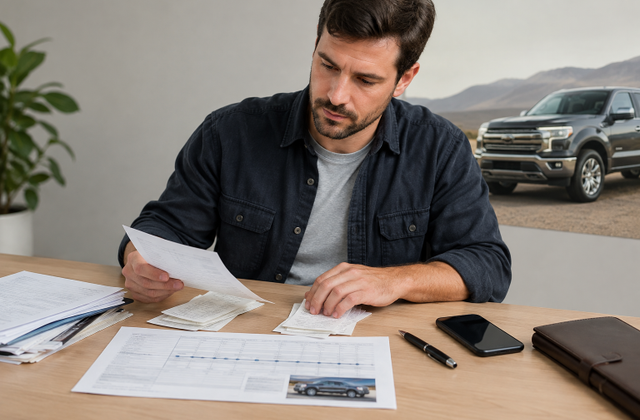
Create a simple list for each vehicle that includes the VIN, asking price, mileage, title status, accident history, available keys, tire condition, and estimated repair needs. This makes it easier to compare more than appearances or a single advertised number.
Verify the VIN, History, and Recall Status
Locate the 17-character vehicle identification number on the lower area of the windshield, then compare it with the title, registration, and listing. A mismatch is a reason to stop and ask questions before moving forward. Review available history information for reported accidents, flood or fire damage, salvage or rebuilt titles, ownership changes, fleet use, and odometer concerns.
History reports are useful, but they do not replace a physical inspection. The FTC’s used-car buying guidance explains that a dealer’s Buyer’s Guide can show whether a vehicle is offered with a warranty or sold as-is, and it also emphasizes independent inspections and written promises.
Before payment, use the VIN to check for unrepaired safety recalls. The recall lookup tool can show whether a specific vehicle has an open recall. A clear result does not prove that every issue has been repaired, but it is an important safety check to complete close to the purchase date.
Inspect the Exterior and Interior in Daylight
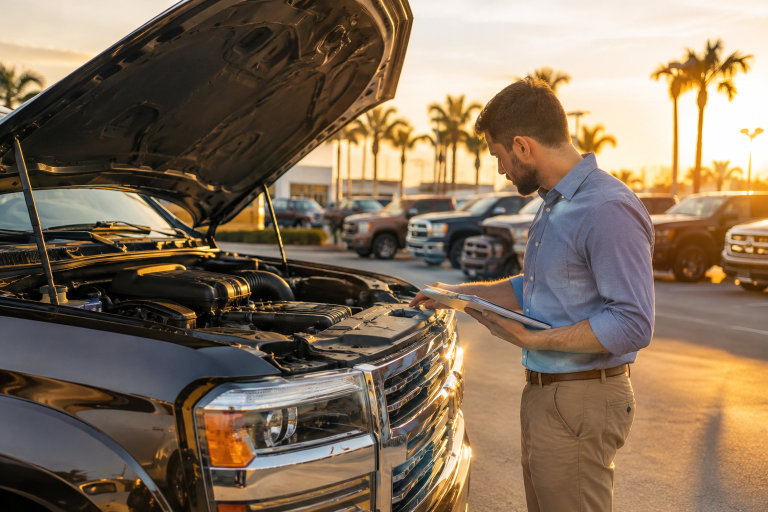
Try to inspect the vehicle in dry daylight. Walk around it slowly and look for mismatched paint, uneven panel gaps, rust, bubbling paint, cracked glass, damaged lights, and signs of fluid leaks beneath the vehicle. In coastal Florida, pay close attention to corrosion around the underbody, wheel areas, door edges, and truck beds.
Check all four tires for uneven wear, visible damage, and sufficient tread. Uneven wear can be related to alignment, suspension, or tire-maintenance issues. Fresh detailing or a spotless engine bay can be appealing, but neither confirms mechanical condition.
Inside, make sure wear on the steering wheel, pedals, seats, and controls seems consistent with the stated mileage. Test the air conditioning, heat, windows, locks, lights, backup camera, infotainment system, seat adjustments, charging ports, and driver-assistance features. Look for musty odors, water stains, damp carpet, warning lights, missing trim, or damaged upholstery. Confirm that advertised keys, remotes, manuals, floor mats, and charging cables are present.
Take a Complete Test Drive
If possible, start the vehicle when the engine is cold. Drive on local streets, rougher pavement, and highway speeds when conditions permit. Pay attention to how the engine starts, how the transmission shifts, brake response, steering feel, vibrations, suspension sounds, and dashboard warnings. Turn the radio off for part of the drive so unusual noises are easier to notice.
Test parking, reversing, acceleration, and braking without driving aggressively. For a pickup, verify that the bed, tailgate, hitch equipment, and four-wheel-drive or all-wheel-drive controls work as represented. If anything feels inconsistent, ask for clarification and do not assume it is a minor issue.
Get an Independent Inspection
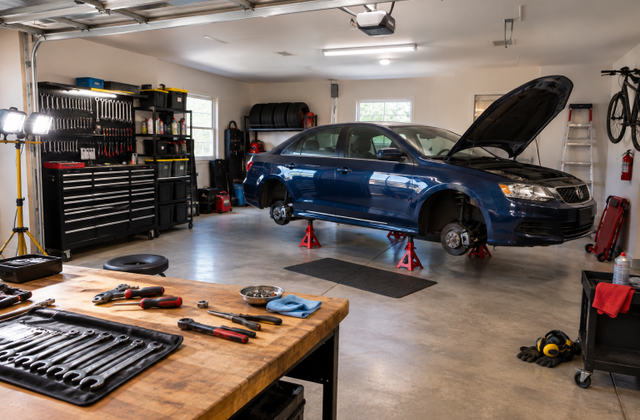
An independent mechanic can identify concerns that are not visible during a short visit or shown on a history report. Request a written report covering the engine, transmission, brakes, tires, suspension, steering, battery, charging system, leaks, structural concerns, and upcoming maintenance. The estimate can support a price negotiation, help you budget for repairs, or show that it is wiser to continue shopping.
Review Price, Financing, and Paperwork
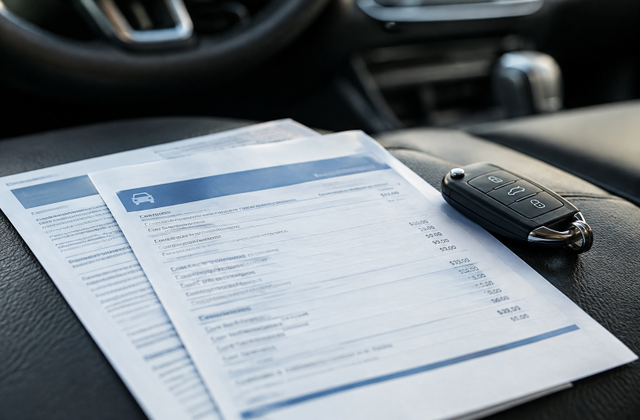
Ask for an itemized out-the-door price that separates the vehicle price from taxes, registration, documentation fees, dealer-installed products, service contracts, and other add-ons. Optional products should be explained clearly before they appear in a contract. Remove anything you do not want before signing.
When financing, compare the annual percentage rate, loan term, amount financed, monthly payment, and total of all payments. Review warranty coverage and determine whether the vehicle is sold as-is. Make sure any promised repair, included accessory, trade-in value, or warranty term appears in writing.
Warning Signs That Should Slow the Purchase
- The seller will not provide the VIN or allow it to be verified.
- The title, vehicle, and paperwork do not match.
- The seller refuses a reasonable independent inspection.
- The mileage conflicts with records or visible wear.
- Warning lights, leaks, strong odors, or unusual driving behavior appear.
- The final price changes unexpectedly or paperwork differs from the verbal agreement.
Final Checklist Before Payment
- Confirm the VIN matches the vehicle and all documents.
- Review title status, history information, and recall status.
- Complete an exterior, interior, and test-drive inspection.
- Obtain an independent inspection report when possible.
- Review the written out-the-door price and financing agreement.
- Keep copies of the Buyer’s Guide, contract, inspection report, and service records.
A strong used-car purchase is not simply the one with the lowest advertised price. For Sarasota drivers, it is a vehicle with verifiable records, sound condition, manageable ownership costs, and paperwork that matches the deal you agreed to.
Read More : Exploring the Future of Wireless Electric Vehicle Charging